

You probably don’t have a motivation problem. You have a threshold problem. The two get confused constantly, and the confusion is expensive — expensive across years, expensive across whole areas of a life — because the fix for one is completely different from the fix for the other.
You know the pattern. You plan to go out on a Saturday evening, look forward to it during the week, and then, when Saturday actually arrives, find yourself on the sofa at eight o’clock having a small, quiet Argument with yourself about whether to leave the house. The Argument almost always ends the same way. You stay in. You tell yourself you were tired, or that you’ll go next weekend, or that it wasn’t really worth the effort. By Sunday, you’re annoyed with yourself, which seems to confirm the diagnosis: you have a motivation problem. You need to want it more.
But here’s the part that gives the game away. On the nights you do push yourself out the door, you almost always have a good time. The conversations are fine, the energy comes back, and the evening turns out to be exactly the kind of thing you were looking forward to all week. The reluctant version of you on the sofa and the animated version of you at the bar are not really at odds. They want the same thing. A doorway separates them.
That is the entire problem, more or less. Not motivation. Not desire. Not some deep mismatch between what you want and what you do. Just the threshold. The activation energy. The small, stupid, sticky resistance that sits between the sofa and the front door, and that has nothing to do with whether the night will be good once you’re out.
What activation energy actually is

In chemistry, activation energy is the minimum amount of energy a reaction needs to get started. The interesting thing — the part that makes the metaphor stick — is that this is true even for reactions which, on the whole, release energy. A log will burn for hours and throw off heat, but it will not catch fire on its own. You need a match. The match is the activation energy. Without it, all that potential sits there, locked inside the wood, doing nothing.
The mapping onto your behaviour is almost embarrassingly tidy. A lot of the things that are good for you — exercise, socialising, creative work, even sleep, in a strange way — give you more energy than they take, on the whole. But getting to the point of starting them costs something. And you systematically underestimate how much.
You mistake the cost of starting for the cost of the thing itself. You feel reluctant to leave the house, and you tell yourself you don’t really want to go out. You feel reluctant to open the laptop, and you tell yourself you don’t really want to write. You feel reluctant to put on the trainers, and you tell yourself you don’t really feel like running. In each case, the reluctance is real, but it is reluctance about the threshold, not about the thing on the other side of it. The thing on the other side is almost always fine, and often great.
This confusion — between “I don’t want to start” and “I don’t want to do this” — is one of the most expensive mistakes you can make. It quietly steers you away from things you actually want, on the strength of a feeling that has nothing to do with the thing itself.
The pattern shows up everywhere.
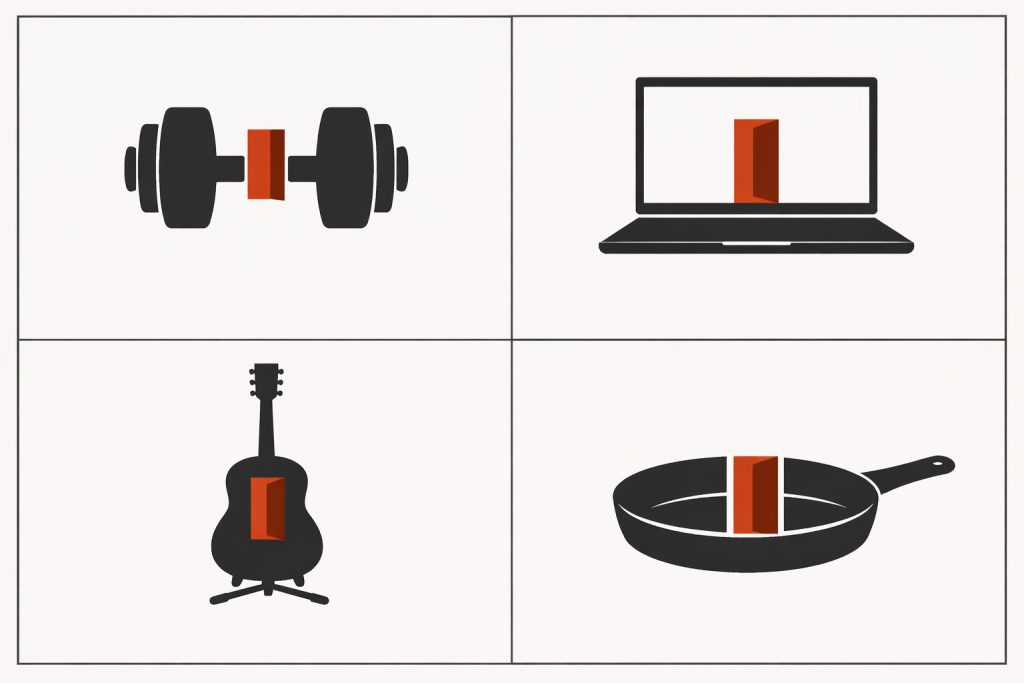
Once you see the pattern, you cannot unsee it. The same friction that keeps you on the sofa on Saturday night is the same friction that keeps you from going to the gym, from writing on a weekend morning, from picking up the guitar that’s been sitting on the stand for a month, from texting an old friend, from cooking properly instead of ordering food. The flavour of the resistance is the same in every case. A small, oddly-shaped reluctance that is much smaller than it feels.
What is striking is how disproportionate it is. The activation energy required to go to the gym is, objectively, almost nothing — change clothes, pack a bag, get in the car. Twenty minutes of admin, maybe. The reward is a workout you almost always enjoy, plus the cumulative health benefits of doing it consistently. The ratio is absurd. And yet the twenty minutes of admin is where the whole thing falls apart, week after week.
If you’re struggling in some area of your life, you’re probably not struggling because you don’t want the better outcome. You’re struggling at the threshold. You want the social life, but not the texting required to arrange it. You want to be in shape, but not the moment of getting changed. You want the side project, but not the act of opening the file. The desired state is not in dispute. The five minutes between the sofa and the starting line is what costs everything.
What helps
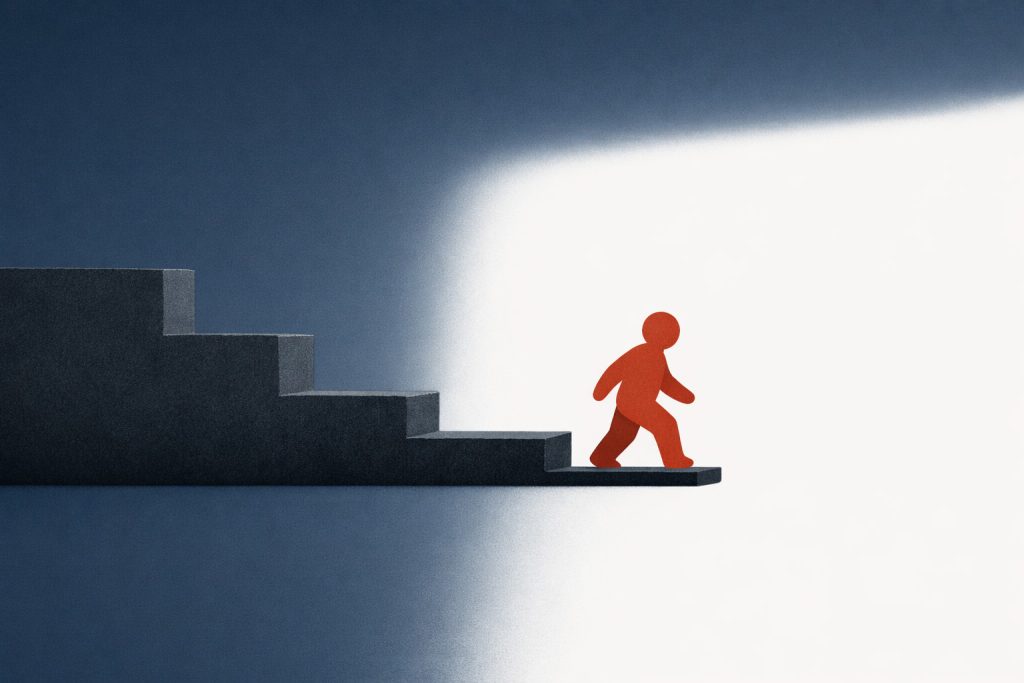
Once you identify the actual problem, your approach has to change. Trying to want it more is the wrong project. Trying to lower the threshold is the right one. These are completely different things, and only one of them works.
A few approaches, in no particular order, all variations on the same theme:
Stop waiting to feel like it. This is the single most important shift, and the hardest to internalise. The feeling of wanting to go does not reliably arrive before going. It usually arrives during. If you wait for it, you will wait forever. So stop asking yourself the question. The question is not “do I feel like going out tonight?” The question is “Have I decided to go out tonight?” If yes, then the feeling is irrelevant, and you’re just going.
Treat it like an appointment, not a preference. You’ll find it much easier to do something at 7 p.m. on Thursday because that is when you do this thing than because you happen to fancy it. A scheduled gym session is a different kind of commitment than a vague intention to go to the gym this week. Removing the decision is half the battle. The decision is where the resistance lives.
Make the first step laughably small. Not “go to the gym”. Just “put the gym clothes on”. Not “write the blog post”. “open the document”. The trick is that the first step is almost always the entire problem. Once the clothes are on, going to the gym is barely a decision. Once the document is open, writing a sentence is barely a decision. Most of your resistance is concentrated at the first millimetre and dissipates immediately afterwards.
Reduce friction in advance. Lay your clothes out the night before. Pack your bag in the morning. Put your running shoes by the door. Put the book on your pillow. Future-you is operating on much lower willpower than you imagine. Set future-you up so that the path of least resistance is the thing you actually want to do.
Accept that motivation follows action, not the other way around. This is one of the most counterintuitive things about being human, and it is also one of the most reliable. You expect to feel motivated and then act. In practice, you act and then feel motivated. The order is wrong in your head. This isn’t just folk wisdom — it’s the founding principle of a therapeutic approach called behavioural activation, developed in the 1970s and now one of the front-line treatments for depression, supported by a large body of evidence. The core idea is that you don’t wait to feel like doing the thing. You do the thing, and the feeling comes after. Show up, even reluctantly, and the energy comes. Wait for the energy, and it doesn’t.
Don’t trust the sofa version of yourself. The version of you sitting on the sofa at eight o’clock deciding whether to go out is not a reliable forecaster of how the night will go. He is tired, comfortable, and slightly anxious about effort. He has a vested interest in not moving. His vote should count for less than the version of you at midnight who has had a great evening and is glad he went. That version is harder to consult in the moment, but his testimony is what matters.
What this reframe is actually doing.
The point of all this is not to become a different kind of person, with different desires, or more discipline, or a stronger will. The work is much smaller than that. The work is to recognise that the resistance is structural, not existential — and to stop letting a five-minute hurdle cost you a life you already, on the other side, enjoy.
That reframe alone is worth more than most productivity systems. Because once you see that the problem is the doorway rather than the destination, the question stops being do I really want this? and starts being, ‘How do I make it easier to start?’ The first question has no good answer, and asking it tends to make you miserable. The second has many good answers, and most of them are unglamorous and practical.
If any of this sounds familiar — if you’ve been telling yourself you have a motivation problem, or a discipline problem, or some deeper story about why the things you say you want never translate into doing — it might be worth asking whether your problem is smaller and more boring than that. Whether it is, in fact, just the doorway.
Most of the time, that’s exactly what it is.
For a higher-level overview of getting things done, see my previous post: 3 Straightforward Steps to Get Things Done




Comments