

Joining on Multiple Columns with Entity Framework and LINQ
SQL lets you AND together as many join conditions as you like. LINQ doesn’t — but anonymous types get you there, as long as you respect three rules.
SQL lets you AND together as many join conditions as you like. LINQ doesn’t — but anonymous types get you there, as long as you respect three rules.

As C# developers, it’s not essential to know every method of implementation, but it is crucial to make an effort to stay current. This article series will attempt to bring you up to speed.
If you’re anything like me, meaning you normally use full Visual Studio and the built-in App templates…
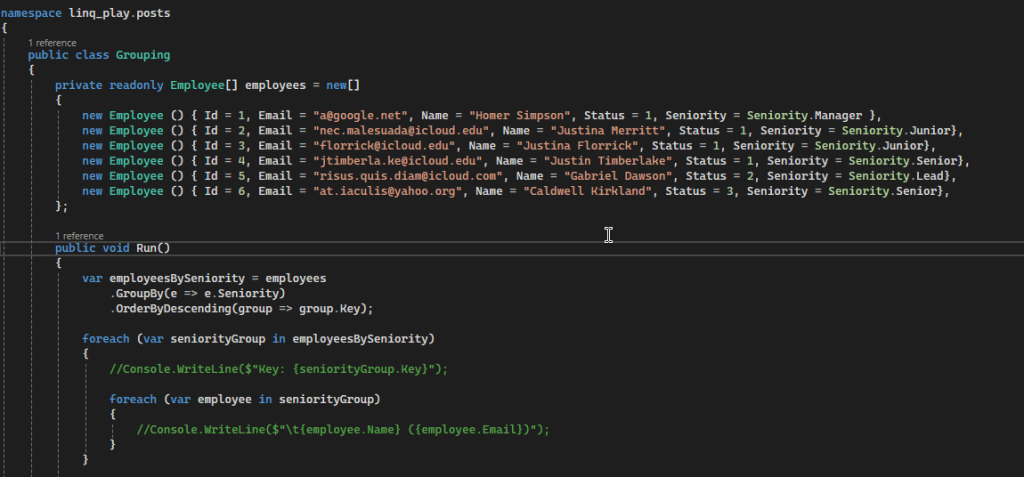
What is grouped data and why would we want grouped data? Well, for one, grouped data is…
This blog post will create a simple ASP.NET MVC Site using Entity Framework Core and Identity Framework….
Ok, this will be the last of the “easy” LINQ posts, meaning once we’re finished with this,…
As we discussed last time, LINQ is a technology that integrates querying capabilities directly into the C#…