
Freedom of Speech Is Not Freedom from Responsibility
The freedom to offend is essential. When any idea becomes immune to criticism, society moves in a dangerous direction. We should never stay silent about harmful ideas to keep the peace – some ideas are, objectively, bad, and we need to be able to say so.
But there is a point where offence crosses into harm, and that is where the state’s role begins. As John Stuart Mill argued, government power is only justified when used to prevent harm to others. I’d push back on the strictest reading of this – it would make seatbelt and helmet laws indefensible, and I think the state has legitimate interests beyond pure harm prevention. But that’s a separate debate.
So, can the freedom to offend bleed into the freedom to harm? Easily. Words have real consequences. They can drive people to suicide. And yet, even acknowledging this, I don’t think it gives the state the right to censor hate speech – even speech targeting characteristics people cannot change. The harm, while real, is rarely immediate enough to justify state censorship. The threshold should be high: speech that poses a direct, imminent threat, or that constitutes a clear incitement to violence – the classic example being shouting “fire” in a crowded theatre – is where the state should step in. Not before.
But the state’s restraint doesn’t obligate everyone else.
Just because the government shouldn’t censor an idea doesn’t mean private individuals or companies must platform it. If you own a yard, you’re not required to open it to every gathering. The same logic applies online. Freedom of speech does not guarantee anyone a platform.
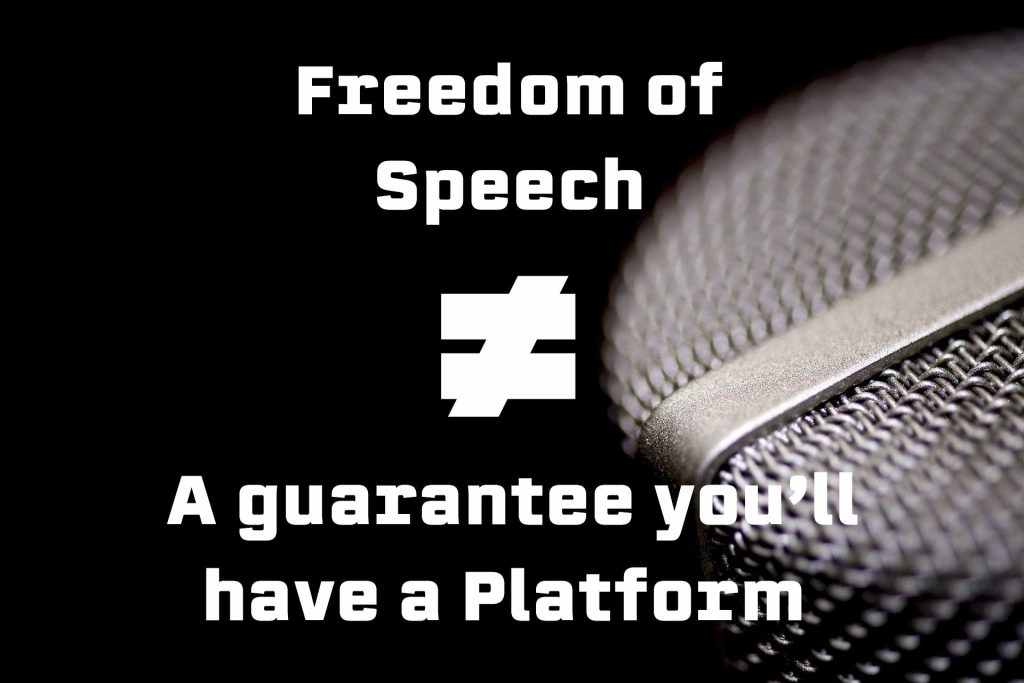
This is widely misunderstood. Freedom of speech doesn’t mean you can threaten people without consequence. It doesn’t mean Facebook, Twitter, or YouTube – all private companies – are obligated to host your content. YouTube has no duty to indefinitely recommend anti-vaccine videos for profit.
So if you run a blog or manage a social media page, delete comments you find harmful. You don’t have to engage with every bad-faith Argument. You can address issues on your own terms – in a new post, for instance – without feeling guilty about it. Free speech is not a right to an audience.
Criticism without alternatives is often just noise.
Be wary of criticism that offers no solution. When someone tears down an idea without proposing anything better, ask why. It may be a smear, not an Argument.
This pattern is common on the political right: feminism is mocked, but no alternative path to equality is offered. If equality isn’t the goal, what is? Often, the real goal is too unpopular to state outright. The strategy is to attract followers with grievance and resentment – people who want to “own” the other side as a substitute for addressing their own insecurities – and then radicalise them gradually. The resemblance to extremist recruitment tactics is not coincidental.
If you’re the one doing the offending, take responsibility.
Stereotypes cause real damage. Constant mockery of LGBTQ+ people contributes to depression and worse. These are documented consequences, not hypotheticals. If you feel compelled to challenge ideas, challenge ideas – liberalism, conservatism, religion, economic theory. That’s legitimate discourse. Attacking people for things they cannot change – their race, their sexuality – isn’t brave or edgy. You might “win” when your opponent decides you’re not worth engaging. But it’s a hollow victory.
We’re all capable of better.
Further reading: “The First Amendment doesn’t guarantee you the rights you think it does” — CNN





Comments