
Agnostics are fence-sitters. They’ve read the arguments, they know perfectly well where the evidence points, and they still won’t say it out loud — not from caution, but from nerve failure. Call it what it is.
That isn’t a comment thread. It’s the Argument of a piece titled “Cowardly Agnosticism”, published in Popular Science Monthly in June 1889, aimed at Thomas Huxley — the man who coined the word twenty years earlier. And it was already a pincer. A bishop had called Huxley’s position cowardly because it refused to believe enough. The Author of the article agreed on the verdict and reversed the reason: judged by its own standard, he said, agnosticism refuses to deny enough.
So the charge is not new, and I’m not going to pretend the internet invented it. What’s changed is where half of it now comes from. The people most likely to tell you today that agnosticism is a failure of nerve are people whose own stated position, by their own definition, is the same withholding. That is the subject of this post, and it runs in three stages: a retreat, a merger, and a caricature. Each one causes the next.
Two claims, and who this is about
Start with the only distinction the rest of this needs.
“There is no God” and “I am not convinced there is a God” are different claims. The first is about the world. The second is about the state of my evidence. They have different burdens, and defending one does nothing to defend the other. Almost nobody disputes this once it’s put plainly.
What people do dispute is which of the two gets to be called Atheism. Two conventions are in circulation — the philosophical one, where Atheism is the proposition that God does not exist, and the popular one, where it’s the absence of belief. I’ve set out why I use the definitions I use elsewhere, and I’m not going to relitigate it here, because nothing below depends on winning that Argument. It depends only on the two claims being different, which they are on anyone’s account.
I’ll also grant that the popular convention has a real motive behind it, not just sloppiness. Antony Flew’s presumption-of-atheism Argument is a serious piece of work, and behind it is a legitimate refusal: no one should be press-ganged into proving a universal negative simply for declining to believe something. That’s fair. Everything I say from here is compatible with it.
Two more exclusions, so the target is clear. If you hold only the weak claim — you’re not convinced, you’ve never said more than that, and you argue accordingly — this post is not about you. And if your Argument is with a specific doctrine rather than with theism as such, it isn’t about you either. Young-earth creationism, faith healing, biblical inerrancy: those are local claims, and denying them requires no position at all on whether any God exists. The Stanford Encyclopedia entry draws that global/local line cleanly, and it matters, because the move I’m describing needs the global version.
The retreat

Here is the pattern.
Someone argues, at length and with evident conviction, that religion is false. Not misapplied, not exaggerated — false. That the whole edifice is a human artefact and no serious person should still be inside it. It’s asserted ordinarily, as a claim about how things are.
Then it’s challenged. Someone asks for the Argument that no gods exist.
And the position changes shape. It turns out nothing that strong was ever being claimed. Atheism is merely a lack of belief. There’s no burden here at all; the burden is entirely on the other side. The conversation is now about who has to prove what, and the original assertion has quietly stopped being the thing under discussion.
That much, on its own, might be an honest correction. Positions get stated loosely and then tightened; that’s normal. What makes it not a correction is the fourth step: it resumes. The next thread, often the same day, the strong claim is back at full strength, argued exactly as before. Nothing was revised. Nothing was conceded. The weak position was occupied for the length of one challenge and vacated the moment the pressure lifted.
That’s the part I want to be precise about, because it means the charge doesn’t require reading anyone’s mind. I’m not claiming to know what people privately believe. I’m pointing at something visible: a clarification that changes nothing about how the person argues afterwards isn’t functioning as a clarification. It’s functioning as cover.
I know the move from the inside, which is why I recognise it so quickly. I made it for years. Calling myself a weak atheist let me keep the label and the confidence that came with it without ever shouldering the burden that the confidence implied.
The merger
Now the second stage follows from the first, without anyone intending it.
If Atheism is the absence of belief, then everyone who hasn’t affirmed there is a God is an atheist. That includes the person who has thought hard about the question and deliberately withheld — and so the popular scheme absorbs them. Hence the compound: agnostic atheist. You’re an atheist about belief, an agnostic about knowledge, and the two axes are said to be independent.
It’s a tidy model. It also quietly assumes something false. It treats belief as binary — you either have it, or you don’t — and so it has only two places to put anyone. But there are three attitudes you can take toward a proposition, not two: believe it, disbelieve it, or suspend judgement. Suspension is a position, arrived at and held, not a gap where a belief failed to appear. A two-state scheme has nowhere to file it, so it files it under doesn’t believe and calls the job done.
The result is that “agnostic” stops naming a position and becomes a modifier about certainty — one that nearly everyone qualifies for, since hardly any thoughtful theist or atheist claims proof. A word that applies to almost everybody picks out nobody. The stance survives. The name for it doesn’t.
How the caricature gets made
Which brings us to the reputation, and to the thing I actually want to say.
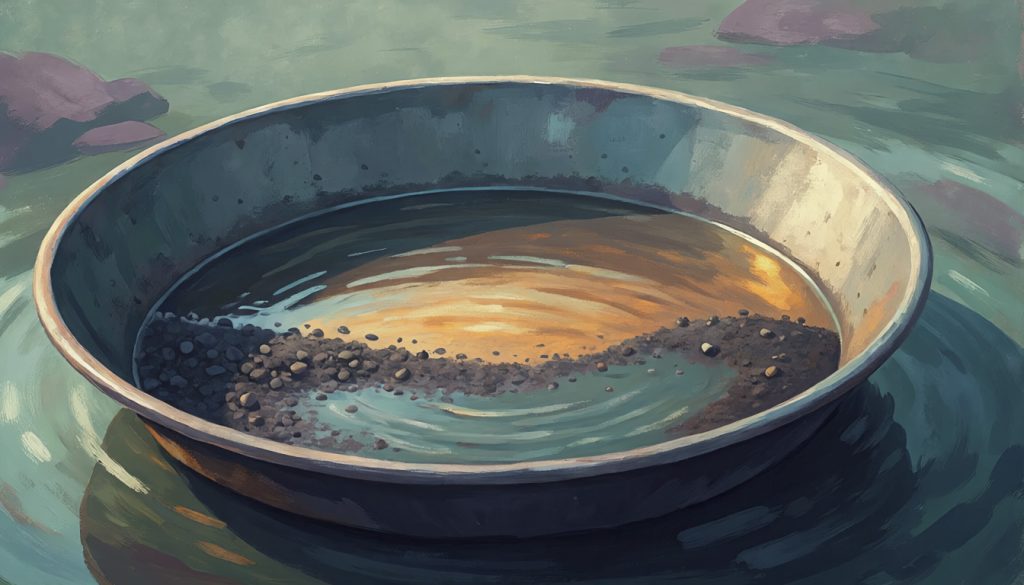
If everyone who has considered the question and withheld is told they’re “really an atheist” — reassigned rather than persuaded — then look at who is left still wearing the word. The people who never took it up as a conclusion. The ones who say nobody can know, so why bother, and mean it as a way of ending the conversation rather than as the result of having had it: apathy, incuriosity, the shrug.
So the caricature isn’t a slander that happened to stick. It’s residue. Strip out the considered cases by relabelling them, and what remains under the name is the part that deserves the reputation. The word inherits the dregs by construction.
And I want to concede the obvious: that shrug does exist. I’ve met plenty of it. Agnosticism-as-avoidance is real, and the contempt aimed at it isn’t unearned. My complaint is that it’s no longer possible to say you’re an agnostic and be heard as anything else, because the alternative reading has been systematically emptied.
Notice, finally, what this does to the cowardice charge. On the popular scheme, the agnostic and the agnostic atheist are in the same doxastic state. Neither one asserts the proposition. Yet one of them is described as epistemically humble, properly respecting the burden of proof, and the other as a fence-sitter without the nerve to commit: same withholding, opposite verdicts. Whatever is producing that difference, it isn’t anything about belief. It’s which label you agreed to wear.
Huxley saw that coming, and answered it in the same year he was being called a coward. Agnosticism, he wrote, isn’t a creed at all, except insofar as it’s faith in a single principle: that it’s wrong to claim certainty about any proposition without evidence that logically justifies it. In the companion essay, he put it as a rule with two halves — follow reason as far as it will go, and then “do not pretend that conclusions are certain which are not demonstrated or demonstrable.”
That is not a hedge. It’s a standard, and a demanding one — considerably more demanding than either of the positions that now flank it. The word was coined to name a discipline. It’s been reduced to a synonym for not having got round to it.
I don’t think anything can be done about that, and this post isn’t a campaign to reclaim a term. It’s just worth being clear about what went missing, and how.
Written with AI assistance.


Comments