


Open Questions
This is the first post in Open Questions, a series on philosophical problems I find interesting, explained as plainly as I can manage. Each post lays out a question and the strongest cases I can build on either side. Where I have a view, I’ll tell you what it is, but it goes at the end, and it’s mine, not the answer. I’m not a philosopher.
Last night you set an alarm.
It’s such an ordinary thing that it takes an effort to see it as a decision at all. But think about what it assumes. It assumes there will be a tomorrow morning. It assumes the sun will come up more or less when it did today, that the world will still be running on roughly the same schedule, that the whole arrangement will hold together for one more rotation.
You are completely certain of this. So am I.
Here’s the uncomfortable part: I don’t think either of us can justify it. Not “can’t justify it with certainty” — can’t justify it at all. Every reason you’re about to reach for turns out to be the belief itself in a different jacket.
Give me five minutes, and I’ll try to show you.
The question
Why do you believe the sun will rise tomorrow?
Sit with that for a second before reading on. Whatever answer comes to you first is the one worth examining, because it’s almost certainly the same one everyone gives.
Mine was: because it always has.
That’s not a stupid answer. It’s a very good answer. It’s the answer that essentially all of empirical science is built on — the idea that what we’ve observed tells us something about what we haven’t. Medicine works this way. Engineering works this way. So does deciding which route to take to work.
But watch what happens when you ask what makes it a good answer.
The circle
Lay it out in steps.
You’ve seen the sun rise many thousands of times. That’s your evidence. But evidence for tomorrow, specifically, only if there’s some connection between what has happened and what will happen. Past sunrises are facts about the past. To make them into a prediction, you need something extra: an assumption that the future will resemble the past. That nature keeps behaving the way it has been behaving.
So what justifies that assumption?
There’s only one thing available. The future has always resembled the past, up to now. Yesterday’s tomorrow arrived on schedule, and so did the one before it.
But that’s an Argument from past regularity to future regularity — which is exactly the kind of inference we were trying to justify in the first place. The assumption is being used to prove itself.

This is worth being precise about, because it’s easy to soften into something it isn’t. The problem is not that the evidence is weak. It’s not that we should hold the belief with 99% confidence rather than 100%. The problem is that the evidence only counts as evidence at all once you’ve already granted the conclusion. Take the assumption away, and the thousands of past sunrises are just a list of things that happened, with no bearing whatsoever on the morning ahead.
There is no non-circular Argument from here to there. Nobody has found one in nearly three hundred years of trying.
The three exits
When I first understood this properly, I tried to get out of it three times. So does almost everyone. Here they are, in the order they usually arrive.
“It’s not certainty, it’s probability.”
Fair enough — I don’t claim to know the sun will rise, only that it’s overwhelmingly likely. But where does the probability come from? From frequencies: it has risen on every one of the days we’ve counted, so the odds of it rising tomorrow are enormous. That’s the same move as before, one level up. To get from an observed frequency to a future probability, you still need the assumption that the pattern holds. All you’ve done is add decimal places to what needs justifying.
“Science explains why. Gravity, angular momentum, conservation laws.”
This one feels much stronger, and it’s the one I held onto longest. We’re not just noting that the sun keeps rising; we understand the mechanism. The Earth rotates, and it will keep rotating because nothing stops it.
But ask where the laws come from. Every one of them is a generalisation from observation — we saw matter behave a certain way, repeatedly, and inferred a rule. And the claim that those laws will still be in force tomorrow is precisely what’s in question. “The laws of physics will hold tomorrow because they’ve held so far” is our original answer wearing a lab coat. The explanation is real, and it’s beautiful, but it doesn’t escape the circle. It just makes the circle wider.
“Look, it works. That’s justification enough.”
This is the strongest of the three, and it’s where most people end up, including me.
It has worked in the past.
I don’t have a clever reply to this one, because there isn’t one. That’s the whole thing. Every defence of the practice of relying on the past has to draw on the past to make its case. You can feel the floor give way slightly here, and that feeling is the Argument doing its work.
What this is not
At this point I want to head off a misreading, because it’s the one that turns this from a genuine problem into a party trick.
None of this is a claim that induction is unreliable. It isn’t a suggestion that science rests on sand, or an invitation to doubt that tomorrow will come. Nobody actually lives that way, and the philosopher who first laid this out was clear that nobody can. David Hume, writing in the 1740s, pointed out that nature doesn’t leave it up to us — we go on expecting the sun regardless of what any Argument says. He called the mechanism custom, or habit.
So the finding isn’t “your belief is false.” It’s something stranger and, to me, much more interesting: here is a belief that is completely unjustifiable and completely unavoidable at the same time. You cannot defend it, and you cannot drop it.
That combination is rare, and it’s worth noticing when you find one.
Where things stand
The problem has not gone away. Two of the more serious responses:
Popper’s escape. Karl Popper argued that science never needs induction—theories are tested and discarded, never confirmed. But whole fields plainly do generalise from accumulated observation, and Popper denied that surviving a thousand tests makes a theory any likelier to be true, which leaves him no reason to prefer the well-tested one when you actually go and build the bridge.
The pragmatic reply. Hans Reichenbach argued that if any method of predicting the future works, induction works. We can’t show it’s reliable, but we can show that nothing else could do better. This is a vindication rather than a justification, and how satisfying you find it depends on whether “you have nothing to lose by trying” feels like an answer to “why is this true.”
Neither has become a consensus. This is not a puzzle that got tidied up after Hume and now sits in the history section. It’s live.
Where I land
Marked clearly as mine, and less settled than I’d like.
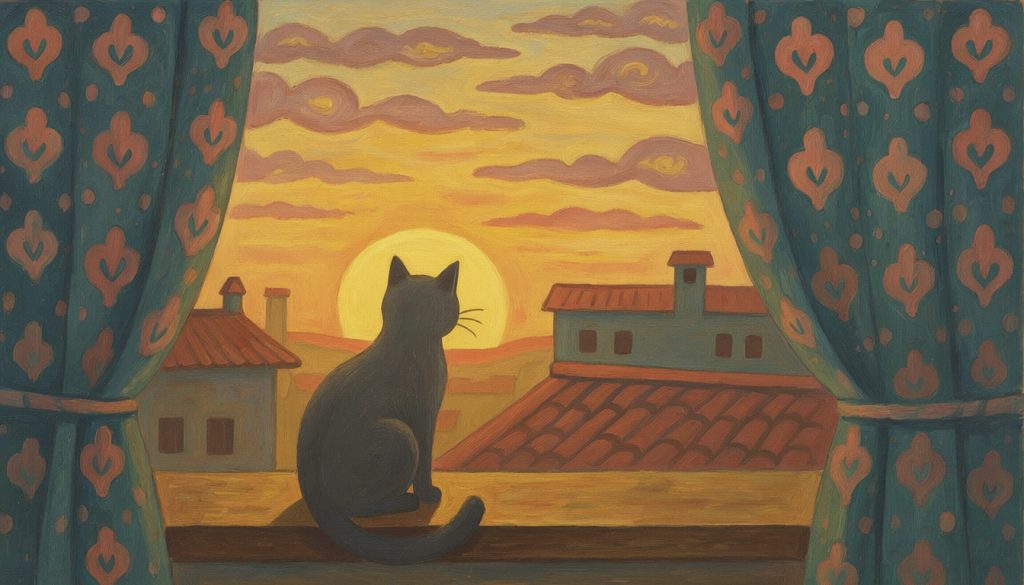
Start with my cat. He has worked out that a particular fridge opening in the morning means food is coming, and he worked it out the only way available to him: it went that way before. That is induction. It is also, obviously, not the conclusion of an Argument. He has never entertained the proposition that nature is uniform, and he never will.
Someone will object that this is associative learning rather than induction proper. I’d concede it and take the concession, because it makes the point harder rather than softer — if the machinery underneath is that sub-rational, then whatever I’m doing when I expect the sun is a more elaborate version of the same thing.
Hume got there first. Section IX of the Enquiry is about the reasoning of animals, and the Argument is that they clearly learn from experience without doing any philosophy; we clearly do what they do, and so our version can’t be reasoning either. Custom in both cases. It’s also not surprising that we’d be built this way: creatures that generalise from experience eat, and ones that treat every morning as unprecedented don’t.
That points to one answer. The question is malformed. Induction was never a proposition waiting for a proof — it’s something a mind does, in the way that seeing and remembering are things a mind does. Nobody demands a non-circular defence of eyesight before opening their eyes. On this reading, three centuries of failure aren’t a hole in our knowledge. They’re evidence that we’ve been asking the wrong kind of question.
The other answer is Reichenbach’s, and it dissolves nothing. It takes the demand entirely seriously and replies: you can’t show induction is reliable, but you can show that nothing else would do better, so use it and stop worrying.
I can’t hold both. If the naturalistic reading is right, Reichenbach is carefully answering a question that shouldn’t have been asked. If Reichenbach is right, the naturalistic reading is a dodge dressed up as an insight.
I lean naturalistic, and I distrust the lean. Dissolving a hard question is always more comfortable than answering one, and comfort is a poor reason to believe anything. What would move me is an account of why the demand for justification is illegitimate here, when it seems legitimate to ask whether some particular inductive inference was a good one — because we ask that constantly, and we’re right to.
So I’ll keep setting alarms, and the cat will keep sitting by the fridge. I think it’s worth knowing that neither of us can say why.
Next in this series: Hume turns the same method on something you care about a great deal more than the sunrise — the belief that you are the same person who started reading this.
Written with AI assistance.

Comments