
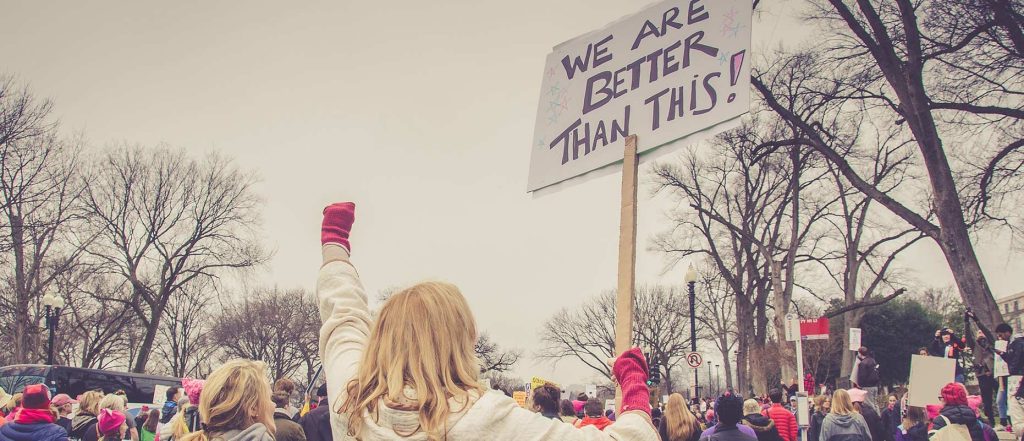
If you follow my page, or if you’ve liked it on Facebook, you’ve probably noticed two things about me. One, I’m an atheist. Two, I post a lot against religion. Those posts aren’t random or just venting. They come from a genuine conviction — the conviction that the world would be a better place without religion, and that the best way to get there is to argue, openly and repeatedly, against the bad ideas that prop it up.
I don’t do it because I enjoy picking fights. I do it because I believe religion is, at its core, a virus of the mind. It’s an infection that gets into people when they are young and vulnerable, hijacks the circuits of logic and reason, and then defends itself against every attempt at rational examination by labelling those attempts as sinful, arrogant, or blasphemous. It tells you that doubt is a moral failing. It tells you that the book is true because the book says so. It tells you that some questions are off-limits, and that your curiosity — the single most valuable thing a human mind possesses — is a temptation to be resisted rather than a gift to be followed. Once it takes hold, it is enormously difficult to dislodge, not because the arguments for it are strong, but because the psychological investment in it is total.
So yes, I post against religion. I will keep posting against religion. Because on the scale of history, the sooner humanity grows out of it, the better.
But.
There’s a larger question behind all of this, and I want to spend some time on it because I think many people — including many of my fellow atheists and sceptics — haven’t quite sat with the uncomfortable implications.
The question is this: if religion is a virus of the mind, what is the disease?
Because religion doesn’t exist in a vacuum, it doesn’t float above human affairs like a cloud. It is embedded in, feeds into, and draws from something much bigger and much older. It is tangled up with identity, with tribalism, with power, with fear, with community, with the very human need to belong and to believe we belong to something that matters. And the single most visible place where all of those things play out, in the modern world, is politics.
Religion heavily influences politics. That’s obvious. Politicians in most countries on Earth still invoke God, still court religious voters, still pass laws that owe more to scripture than to evidence. You cannot understand American politics without understanding evangelical Christianity. You cannot understand Turkish politics without understanding political Islam. You cannot understand the abortion debate without understanding the religious frame it sits inside. In that sense, religion pours fuel onto the fire of politics — it gives bad ideas a moral gloss, and it turns policy questions into holy wars.
But the relationship goes both ways, too. Skilled politicians use religion. They cynically reach for it when it’s useful and drop it when it isn’t. They know that a voter who believes their party is God’s party will forgive almost anything — because to question the party would be to question God, and no one wants to do that. So the two reinforce each other. Religion gives politics its intensity. Politics gives religion its power.
And yet, as entangled as they are, I have slowly come around to the view that politics — not religion — is where the real fight is. Religion can be reasoned with over the course of generations. It is already dying in most developed countries, slowly but steadily, as literacy, prosperity, and access to information do their work. My children’s generation will be less religious than mine, and theirs will be less religious still. The trend lines are clear, even if the pace is frustrating.
Politics, on the other hand, is not trending in any good direction. And that’s what I want to talk about.
The world is getting better. And also worse.
I should be honest about the big picture before I get to the rant.
If you zoom out — really zoom out, over centuries — the world is getting better by almost every metric that matters. Extreme poverty has collapsed. Child mortality has collapsed. Literacy has soared. Violence per capita is far lower than it was in any pre-modern era. More people in more countries enjoy more freedoms than at any point in human history. Steven Pinker has written entire books on this, and the data is genuinely on his side.
So when I say things are getting worse, I don’t mean they’re getting worse in the grand historical sense. I mean something more specific and more immediate. I mean that the direction of travel — which for most of my adult life felt like it was pointing, slowly but reliably, toward a more rational, more liberal, more scientifically literate world — has started to wobble. It has started to reverse in places we took for granted. The assumptions I was raised on — that democracy spreads, that rights expand, that settled science stays settled, that the centre holds — are being tested in ways I did not expect to see in my lifetime.
If you’re on the left, like me, you’ve probably felt this too. That strange, nauseous sensation of watching things you thought were locked in — abortion rights, climate consensus, European unity, the basic norm that politicians don’t openly lie about easily verifiable facts — suddenly becomes contested again as if someone opened a door that was supposed to stay closed.
Politics is now the bigger problem, and here’s why
My thesis — the thing I’ve come to believe after years of thinking about this — is that the divisions politics creates in our world are now a bigger threat to human flourishing than religion itself.
Consider the most important issue of our time: climate change. The science is settled. It has been settled for decades. Every major scientific body on the planet agrees. And yet, in country after country, belief in climate change correlates not with scientific literacy but with political affiliation. In the United States, whether you “believe in” climate change is now primarily a function of whether you vote Republican or Democrat. That is a catastrophic state of affairs. It means that on the single most consequential collective-action problem our species has ever faced, the deciding variable is tribal loyalty, not evidence.
And it’s not because the people denying climate change are uniquely stupid. Plenty of them are intelligent, educated, and accomplished. It’s that admitting climate change is real would mean admitting their political tribe has been wrong about it — and that is psychologically intolerable. It would mean, at some level, admitting that the other tribe was right. And for a committed partisan, being right matters less than your side winning. Reality becomes negotiable. Evidence becomes suspicious. Scientists become enemies.
This is new. This is a specifically modern, specifically political disease. And it’s worse than religious denialism in one crucial way: when a religious person rejects a scientific claim because it contradicts their holy book, at least they’re being consistent with a worldview. When a political partisan rejects a scientific claim because their party tells them to, they are outsourcing their perception of reality to a group whose incentives have nothing to do with truth and everything to do with winning elections.
That is where we are now, in a lot of places. And it terrifies me.
The right is winning, and the right is worse than it used to be
Look around. The right wing is on the rise again, almost everywhere, and this isn’t the boring conservative right of twenty years ago. This is something sharper, angrier, less constrained by the old norms.
In the United States, abortion rights are in genuine jeopardy for the first time since Roe v. Wade. Trump has been openly reshaping the Supreme Court to overturn it, and the people cheering him on include women who, if that overturn happens, will watch their own daughters lose the same rights they grew up with. The consequences will not be theoretical. When safe, legal abortion disappears, it doesn’t reduce abortion. It just moves it into back alleys and onto coat hangers. Women will die. Not in the abstract, not eventually — actually die, specific women, in specific hospitals, from infections and haemorrhages and desperate choices made without medical supervision. We’ve been here before as a species. It ended the first time badly. It will end badly again.
In Turkey, evolution is being quietly evicted from the school curriculum. A democracy that was, not that long ago, considered a model for the secular Muslim world is sliding, step by step, into something else. Erdoğan’s government is no longer even particularly subtle about it.
In the United Kingdom, voters have chosen to leave the European Union based on a campaign built on lies that have since been openly admitted. The “£350 million a week for the NHS” bus was a lie. The warnings about Turkish membership of the EU were a lie. The entire edifice was a nationalist fantasy dressed up as economic calculation, and now an entire country is slowly discovering that you cannot, in fact, negotiate your way out of physics and geography.
Across Europe, nationalist parties are gaining parliamentary seats in country after country. In Germany, the AfD. In France, the Front National (now rebranded, but not remotely reformed). In Italy, Hungary, Poland, and Austria, the pattern repeats. The parties are different. The rhetoric is the same. Immigrants are the problem. The EU is the problem. Brussels is the problem. Some shadowy cosmopolitan elite — and we all know who they really mean when they say that — is the problem. Everything bad in your life is someone else’s fault, and here is a strongman who will fix it by hurting them.
And racism — we need to talk about racism, because a lot of people on the left have been carefully pretending it went away, and it very clearly did not. Whether it was dormant or masked by polite society, I don’t know the answer to. But it’s no longer masked. Charlottesville happened. Actual Nazis, with actual torches, chanting actual Nazi slogans, in an American city, in the twenty-first century, defended by the sitting President as “very fine people.” That happened. That was real.
And patriarchy — a word I used to think was a bit overused by a certain kind of online feminist — looks stronger to me now than it did a decade ago. The #MeToo movement is revealing not an aberration but a systemic reality that was previously unacknowledged. The volume of it, the sheer number of men with power who turned out to be using that power to abuse women, is staggering. And the backlash to #MeToo — the “but what about due process” brigade, the “witch hunt” framing, the rush to find exonerating details — tells you everything you need to know about how deep the instinct to protect men and dismiss women still runs.
What terrifies me most is that all of this is being exported. American culture is the world’s dominant culture, for better and for worse. Trump did not invent nationalism, but he mainstreamed a certain flavour of it. That flavour is now being adopted — explicitly, in some cases — by politicians in countries that previously wouldn’t have touched it. Abortion will be questioned again across the world. Climate denial will spread. The permission structure has changed. Things that were unsayable five years ago are now just part of the conversation.
The loyalty problem
Here is what I keep coming back to, because I think it’s the heart of everything.
Take the United States. I don’t follow every twist and turn — I have a life — but even with casual attention, the evidence is overwhelming. There is credible reporting of Russian interference in the 2016 election. There is credible reporting of collusion. There is reporting that, if the same facts applied to a Democratic president, they would have been treated by the right as conclusive evidence of treason. There are scandals every week that would have ended any previous administration. Children are being separated from their parents at the southern border and held in what are, let’s be honest, cages.
And the Republican base? Stronger than ever. The defences get more elaborate, the goalposts move week by week, the contradictions pile up — one day, Russia is a hoax, the next day, of course, there was contact. Still, it wasn’t illegal, the next day it was illegal, but it wasn’t the President, the next day it was the President, but it wasn’t wrong. And the base follows along, because the alternative — the alternative is admitting they were wrong, that they were conned. That the man they defended, voted for, argued with their relatives about, put signs in their lawns for, is not the patriot they thought he was.
That is not a conclusion the human mind reaches willingly.
This is the kind of misguided loyalty that reason, logic, or appeals to decency cannot dislodge. It is the loyalty of people whose identities have become fused with their political tribe. If the party loses, they lose. Not just in some abstract civic sense — personally, emotionally, existentially. Questioning the party would mean questioning themselves, and the self-image at stake is too big to put on the scales.
And so they double down. Confirmation bias kicks in. Motivated reasoning fills the gap between what the evidence shows and what the tribe requires them to believe. Every new scandal becomes either fake news or whataboutism (“but Hillary!”), or a minor thing being blown out of proportion by a biased media. The machinery of rationalisation is remarkably efficient.
People love to be right. And right now, on the right, they feel like they’re winning. And when you’re winning, it is genuinely very hard to see how you could be wrong.
So what do we actually do?
Here is the part where, if I were a more optimistic writer, I would hand you a neat three-step plan.
I don’t have one.
What I have are a few things I think are true and a few I think might help.
The first true thing: you are probably not going to change the mind of a committed partisan. I’m sorry. You can try, and sometimes minds do change, but the psychology is stacked against you. The deeper someone is into a tribe, the more likely it is that challenging their beliefs will push them further in, not pull them out. This is counterintuitive but well-documented. The backfire effect is real. Debate, on its own, will not save us.
The second true thing: there is a huge population of people who are not committed partisans. They are undecided, disengaged, cynical about voting, convinced that their vote doesn’t matter, or just tired. These people are reachable. They are persuadable. They vastly outnumber the committed partisans on either side. And in democratic systems, elections are decided by margins, meaning this is the group that actually matters.
So the practical advice I would give is: don’t waste your energy arguing with the immovable. Spend it on the movable. Talk to the friend who shrugs and says, “They’re all the same.” Talk to the cousin who doesn’t bother voting because it doesn’t change anything. Talk to the coworker who half-watches the news and has absorbed the vague impression that everyone is lying. These are the people whose small shifts, multiplied across millions, actually decide the future.
Be gentle. Don’t make them feel stupid. Don’t treat them as if they’ve been asleep — treat them as if they’ve been busy, because they have been. Give them information in small, digestible pieces. Help them see the stakes without making them feel lectured at. And, crucially, offer them a way in, a way to care without requiring them to adopt your entire political identity immediately.
The third true thing: this matters. I know that sounds obvious, but I don’t think enough people feel it in their gut. The future of the planet is genuinely on the table right now. Not metaphorically — literally. The climate models are clear about what happens if we fail to act, and political paralysis is what that failure looks like. If the wrong people keep winning for long enough, the consequences won’t be confined to a four-year election cycle. They are going to be measured in ecosystems, in coastlines, in the millions of climate refugees, in whether my children and yours inherit a livable world or one that is not.
You are part of this world. You don’t get to sit it out. “This doesn’t concern me” is, at this point in history, not a morally available position. It concerns you. It concerns all of us.
We should be better than that.
We can be better than that.
The question is whether we will be — and that question gets answered, every day, by millions of small choices about what to say, who to talk to, what to share, what to show up for, what to refuse to tolerate.
Those choices are yours. Make them well.
This post was originally written in 2018 and expanded in 2026 with the assistance of AI.


Comments