



On January 1, 2002, twelve countries stopped using money they had used for centuries.
The Deutsche Mark went. So did the French franc, the Italian lira, the Dutch guilder, the Austrian schilling. Some of those currencies were older than the states that issued them. Nobody was invaded. Nobody lost a war. Twelve governments agreed to do it, and then did it.
Twenty-five years later, that is still the strangest fact about the euro. A national currency is one of the oldest markers of sovereignty, older than flags, older than anthems, older than most parliaments. Twelve wealthy democracies handed theirs over voluntarily. Bulgaria became the twenty-first country to do the same at the start of this year, and did it while roughly half its population was against the idea.
So the question worth asking on the anniversary is not whether the euro was a good idea. The question is what those countries thought they were buying, and whether they got it.
They stopped being each other’s problem.
The usual answer is peace, and the usual version of that answer is wrong.
The euro did not end war in Europe. The order that ended war in Europe was already fifty years old when the notes went into circulation. The European Coal and Steel Community came in 1951, and it worked by putting the industrial inputs of war under shared authority. By 2002 the Argument had long since been settled.
The euro changed the cost of unsettling it. A shared currency is not a promise. It is plumbing. It runs through every contract, every mortgage, every pension, every price on every shelf in twenty-one countries. Walking away from it means rebuilding all of that under conditions of panic. The euro took a political preference that could have been reversed by one bad election and turned it into infrastructure that would be ruinous to tear out.
That is a smaller claim than “the euro brought peace.” It also survives contact with a sceptical reader, which the larger claim does not.
Why goodwill is not enough
Europe had tried monetary union before, and the attempt is worth remembering because it failed.
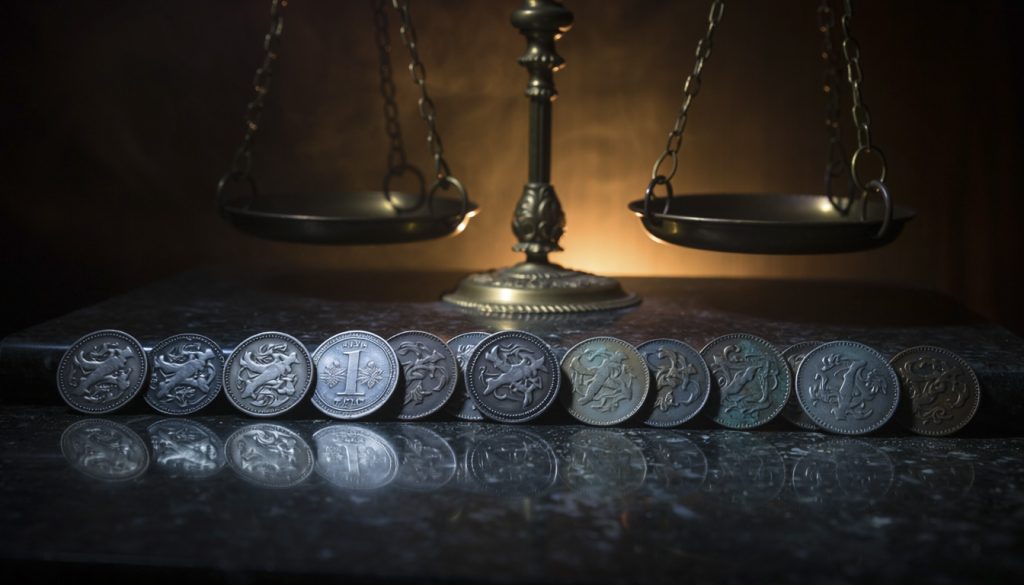
The Latin Monetary Union was founded in 1865 by France, Belgium, Italy and Switzerland, with Greece joining three years later. Members agreed to mint coins to a common standard of weight and fineness, so that a franc, a lira and a drachma would be interchangeable. For a while they were. Then the members started cheating. Coins were issued below the agreed silver content, most notoriously by Greece and by the Papal States. At the same time, their issuers went on enjoying the full value of everyone else’s honest money. The union limped through the collapse in silver prices, was overtaken by the First World War, and was formally wound up in 1927.
It failed because it had a standard and nothing to enforce it: no shared central bank, no court, no cost to defection beyond embarrassment. Every member had a private incentive to cheat and no structural reason not to.
Hold on to that, because it is the point the rest of this essay turns on. The Latin Monetary Union had cooperation in the ordinary sense. Everyone agreed. Everyone wanted the benefits. It still lost.
The thing they were actually buying
Here is the part the peace Argument tends to bury.
Germany is the largest economy in the European Union and one of the largest in the world. It accounts for a little over 4 per cent of global output. France is under three per cent. Italy is a little over two per cent. Taken one at a time, these are not countries that set terms with anyone. They receive terms.
The European Union, taken together, is roughly a sixth of the world economy, in the same weight class as the United States and China and no one else. Three entities on the planet have regulatory decisions that other people have to plan around. Every European country is a member of exactly one of them, or of none.
This is where the objection about Switzerland comes in, and it is worth answering directly because it looks stronger than it is. The Swiss franc is famously stable. Switzerland is rich, well governed and outside the euro, so what exactly is the Argument?
The Argument is that stability and power are different things. Switzerland is stable partly because it is small, open and sheltered inside an order that other people built and maintain. It is stable the way a well-built house in a good neighbourhood is safe. That is a genuine achievement, and it says nothing at all about whether the house could have zoned the neighbourhood, or could rezone it now. Switzerland does not write the rules of the trading system it prospers inside. It complies with them efficiently. If all you want is stability, that is enough. If you want to shape anything, it is not.
So the honest description of what the euro is for goes like this. Cooperation and competition are not opposites. They are questions about where you draw the line around the group that counts as us. Europe moved that line, from France against Germany to Europe as a single unit. Everything else follows from that move.

What moving the line already made possible
That is not a theoretical claim. Europeans have been living off the results for fifty years.
Airbus. Founded in 1970 as a consortium because no single European aerospace industry had the capital, the market or the nerve to challenge American dominance of civil aviation alone. Today it is one of two companies on Earth that build large passenger aircraft. No national path led to that outcome. There was never going to be a French Boeing.
CERN. Twelve countries signed the founding convention in 1953, and the organisation now has twenty-five member states, with Slovenia joining most recently. It exists because particle physics at the frontier requires machines that no member could justify building alone. The World Wide Web came out of it in 1989 as a side effect of the problem of getting physicists to share documents. That is the shape these things tend to take. You fund the impossible thing, and the returns arrive somewhere you were not looking.
Galileo. A satellite navigation system built so that European civilian and military infrastructure would not depend permanently on a system another government can degrade or switch off at will. The relevant question is not whether GPS is good. It is who decides.
GDPR. Whatever you think of the regulation, its global reach is the clearest demonstration of the mechanism. Companies with no European ownership rewrote their data practices worldwide because the European market was too large to forgo and too expensive to serve under two different regimes. That kind of leverage is not available at national scale. It is a function of size, and size is a function of having pooled.
Every item on that list was impossible for any member acting alone and routine once the line moved. That is the pattern.
The bill
None of which comes free, and an essay that skipped the invoice would not be worth reading.
Between 2010 and 2015, the eurozone came close to breaking over Greece. The structural problem was real and remains only partly fixed. A single monetary policy is set for economies that do not move together, so the interest rate that suits Germany can be badly wrong for Greece or Spain. Members that cannot devalue must adjust through wages and employment instead, which is slower and hurts more. There is a currency union without a full fiscal union, which means the shock absorber that would exist inside a single country does not exist here. Add a decision-making process remote enough that the democratic objection is not a smear but a description.
The human cost was severe, the resentment ran in both directions, and by the summer of 2015 Greek exit was a live possibility with capital controls in force.
And then everyone stayed.
That is the part worth sitting with. Not that cooperation was painless, because it was not, but that twenty-one countries kept choosing it while it hurt, and Bulgaria queued up to join afterwards knowing all of this. Cooperation is not the comfortable option. It is constraining, expensive and sometimes humiliating, and the members priced that in and paid.

The same threshold, one size up
Now extend the pattern, because the interesting question is what else sits on the far side of the same line.
A category of problem is defined by structure rather than by virtue. Some things cannot be done by any actor small enough to capture the whole return, so they do not get done, no matter how obviously worth doing they are. Not because anyone is short-sighted. Because the arithmetic does not close.
Fusion. ITER is being built in southern France by seven members, one of which is the European Union acting for all twenty-seven of its states, with more than thirty nations involved in total. No single country builds this. The bill and the timescale are both beyond national politics.
Antibiotics. A textbook market failure. The most valuable drug we could develop is one that would be stockpiled, used rarely and sold cheaply, which is to say the drug we most need is the one nobody can profitably make.
Pandemic preparedness. Standing capacity that shows a return only in the years it is not needed, which makes it the first thing cut in every budget cycle by every actor optimising alone.
Climate infrastructure. Grids, storage and transmission at continental scale, where the physics ignores the borders and the financing does not.
AI governance. Right now, the dominant dynamic is regulatory competition, a race to the bottom wearing a suit. The only actors capable of imposing terms are the ones with markets large enough that compliance is cheaper than exit. There are, again, about three.
Long-horizon science. The CERN pattern at planetary scale, funding instruments whose payoff nobody can forecast and everybody eventually uses.
The framing matters. These are not things humanity ought to do because cooperation is noble. They are things that are structurally unavailable to actors of the current size, in exactly the way that competing with Boeing was structurally unavailable to France in 1965.
What it costs to get in
Which brings the Argument back to 1865.
The Latin Monetary Union had agreement, goodwill and shared interest, and it lost to the first member who found it convenient to cheat. The euro survived a crisis that should have killed it, and the difference was not that Europeans in 2010 were more virtuous than Europeans in 1885. The difference was a central bank, a court whose rulings members actually obey, and commitments deliberately built to be painful to reverse.
So the lesson is not that we should cooperate more. Everyone already agrees we should cooperate more, and agreement is the cheap part. The lesson is that cooperation at scale runs on enforceable surrender of sovereignty, and that on January 1 2002, twelve wealthy democracies demonstrated they would pay that price without being conquered first.
We know the price now. It has been tested. The open question is not whether the mechanism works.
It is whether anything on the list above frightens us enough to pay it again, one size up.
Written with AI assistance.
Further reading
- History of the euro
- Latin Monetary Union
- European Coal and Steel Community
- ITER: what it is
- Anu Bradford, The Brussels Effect: How the European Union Rules the World (2020)




Comments