
Going Digital
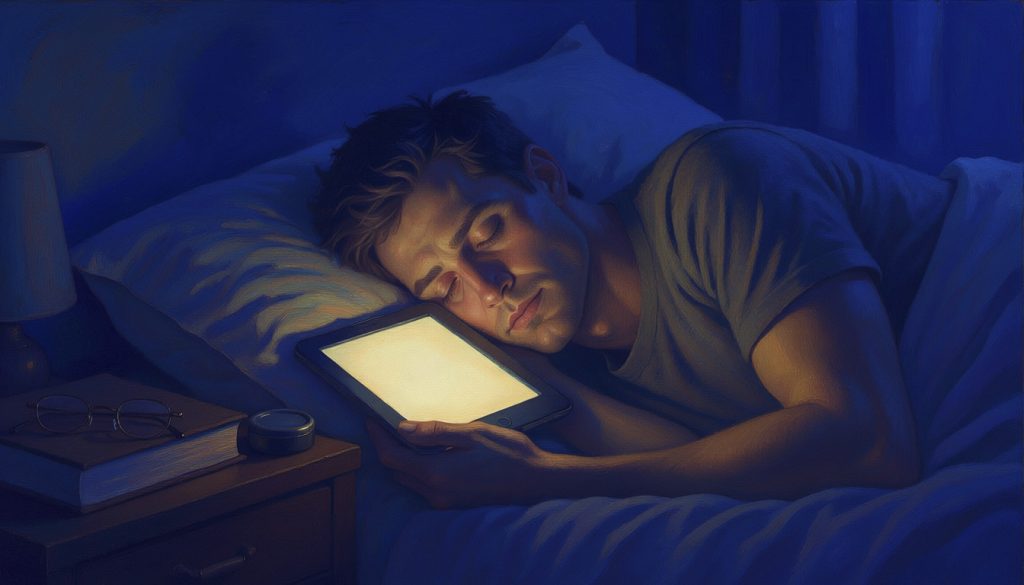
It’s half past eleven and the contact lenses are out. The book on the nightstand is a 500-page hardback, the type somebody settled on in a design meeting years ago, and the lamp is in the wrong place. To read it, you would have to put the lenses back in, sit up, and hold the thing open at a specific angle with both hands. So you don’t read it. You pick up the Kindle instead, where the text is already the size your eyes need, the light comes from the page itself, and the whole thing sits in one hand while you lie on your side.
Nothing in that story is about a love of screens. It’s about what each object demands before it will work at all.
The last post argued that paper wins at capture and digital wins at everything downstream. That’s true, and it’s only half the picture. The other half is that paper’s win at capture comes with terms attached. Paper asks you to arrange yourself around it. Digital rearranges itself around you.
The conditions you don’t notice until you fail one
Reading a physical book requires light, two reasonably free hands, a stable position, and eyes that work at whatever size the publisher picked. Writing on paper requires a surface, a working pen, and enough space left on the page for the thought you’re having.
None of that is a complaint. Those are just the conditions of use, and they’re completely invisible right up to the moment you don’t meet one. Then the book doesn’t get read, and the note doesn’t get written, and you file it under not being in the mood.
What changes when the text is adjustable
The type resizes. Your eyes don’t reverse. Near vision degrades for everybody eventually. It’s not a niche accommodation; it’s a schedule. What that means for a paper library is that it slowly becomes unreadable, one point size at a time, and the only remedy is external: lenses, glasses, better light, a different chair. Large-print editions exist, cost more, cover a small fraction of the catalogue, and are physically enormous. Digital quietly hands every book its own large-print edition, for free, on a slider.
Weight is constant. A novella and a 900-page biography weigh the same and hold open the same way. This is the one-handed Argument, and it matters more than it sounds, because the reading people actually do happens in awkward positions. On your side in bed. Standing on a tram. One hand on a fork. A thick hardback rules all of that out — not by being unpleasant, but by needing a second hand you don’t have.

No external light source. You can read in a dark room without a lamp and without waking anyone. Paper has never once been readable in the dark.
A word is one tap from its definition. This is the one I’d defend hardest, and it isn’t about convenience. If you read in a language that isn’t your first, an unknown word on paper costs you a trip to a dictionary, so you don’t take it — you guess from context and move on. Enough of that and you quietly start choosing easier books. A lookup that costs one second doesn’t make reading more comfortable; it raises the ceiling on what you’ll attempt at all.
The honest cost, stated plainly: you don’t own a DRM’d ebook; you own permission to read it, and permission can be revoked in ways a shelf can’t. That’s a real loss and it points the other way from everything above. Buy the paper copy of the books you’d be upset to lose.
The same Argument, holding a pen
Swap the book for a notebook and the shape doesn’t change.
A slate has no spine, so there’s no gutter fighting your hand and no half-page you can’t write flat. A pocket notebook is small, but small is not the same as manageable — you still need a surface, and you still need the pen.
Which is the second object problem. Paper needs two things present, and the second one fails: pens dry out, leak on planes, and run out mid-sentence. A stylus does none of that.
Then there’s the last page. Somewhere around page 180 of a paper notebook, you start rationing. You skip the diagram, compress the entry, break a long thought across two volumes, and never link them. Nobody has ever written more tersely because their device was filling up.
And a small one that’s actually structural: you can insert space in the middle of a digital page. On paper, adding three lines to a section you finished last week means rewriting the section. So you don’t. The first draft becomes the only draft by default.
I’ll concede something here before anyone says it for me. Several of those are arguments for a device rather than for the medium — a front light, a spineless slate, a stylus that never runs dry. Fair enough. But that’s how the comparison actually reaches you: not as an abstract question about pixels versus ink, but as two specific objects on a desk.
The planner, which expires
The caricature everyone recognises: you buy a dated planner in April and pay full price for a book that’s two-thirds spent. Or you decide in September to get organised, and the sensible move is to wait until January, which is a strange thing for a productivity tool to ask of you.
Under the joke is something less funny. A dated planner is pre-commitment. You choose the layout before you know how you’ll use it — weekly or daily, this much space per day, these sections in this order — and the choice was made by someone who has never met you. Then a quiet week gets a full page it doesn’t need and a chaotic one gets four lines that can’t hold it.
And when it stops working, the object stays. The unused two-thirds sits on the desk, being a small daily reproach. Nobody has ever felt guilty about an unused template.
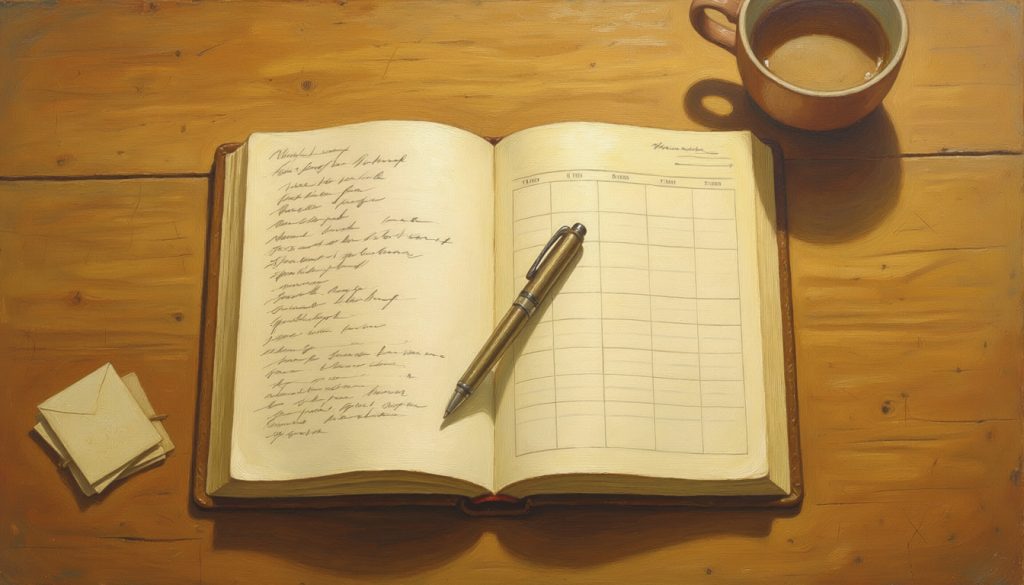
The obvious objection first, because it’s the correct one: bullet journalling solves the dating problem completely. An undated notebook starts whenever you start. What’s worth noticing is the price — it wins flexibility back by making you rebuild the structure by hand, every month, forever. The index, the migration, the ruled boxes. That labour is what undated paper costs, and it’s real work even when you enjoy it.
What paper’s rigidity is genuinely good for
Three things, and they’re not small.
There’s no settings menu, so there’s no tool-hopping — which the last post named as one of digital’s honest costs, and it stands. A notebook cannot be reconfigured instead of used.
Finite space forces a decision about what matters. If today gets one box, something has to be left out, and choosing is most of the value.
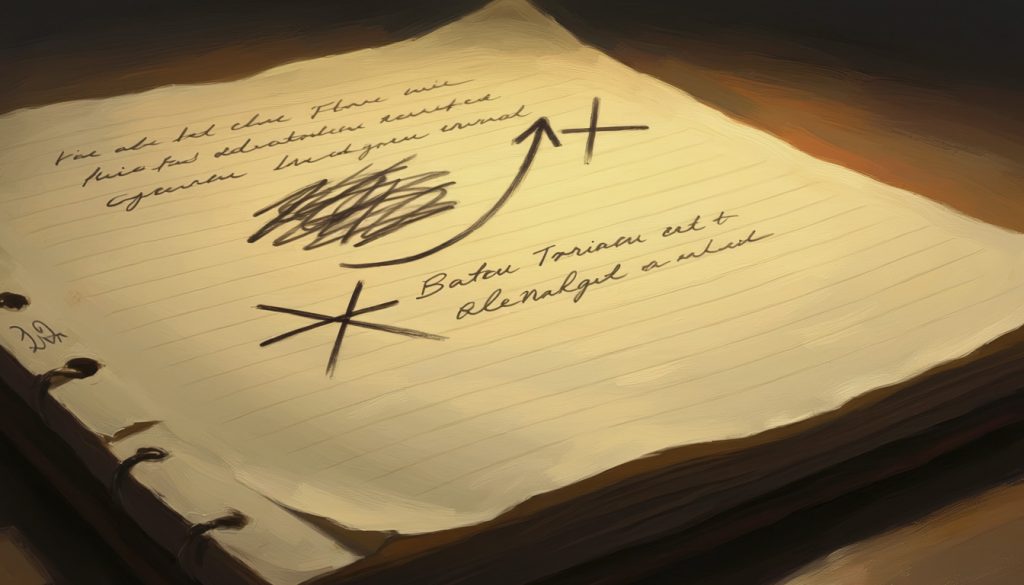
And the page can’t be silently edited. Your crossings-out stay visible, which means the record of what you thought last month is the actual record, not a tidied one.
Two things called discipline
Here’s where I’d push back on the usual defence, though. “Discipline” is doing two different jobs in that Argument, and paper enforces both with the same object, which is why they get praised as one thing.
The first is constraint that shapes the work: finite space, no configuring, a record you can’t quietly revise. That’s real and worth keeping.
The second is constraint that shapes your behaviour: keep going, because the pages are already bought and it’s only August. That isn’t discipline. It’s a sunk cost with a better name.
Separate them and the planner looks different. Somebody abandons theirs in March and calls it a personal failure. What actually happened is that a layout chosen by a stranger in a print shop didn’t fit the way they thought it would, and they found out. That’s a result, not a weakness. It’s not healthy to keep doing something that doesn’t suit you because you spent money on it and once believed it would work.
The fair objection is that digital then lets you quit anything the moment it gets hard. But quitting well is its own discipline. You have to run an honest trial and then be willing to read the outcome — and the honest part is load-bearing. Used as intended, not modified halfway through, across a normal week rather than an unusual one. Nearly every system feels bad for the first three days, so three days proves nothing. A week of ordinary life proves quite a lot.
The real charge against paper isn’t that it demands persistence. It’s that it makes the experiment expensive and slow to report back. You pay for a year upfront and find out in month four, by which point stopping feels like waste instead of information.
The middle path, and what it doesn’t fix
A paper tablet is the obvious compromise, and mostly it earns the position. Templates on demand genuinely solve the dating problem: a fresh weekly spread in June, a different layout next month if this one isn’t working, no January. It keeps the ergonomics—no gutter, constant weight, one object instead of two—and adds flexibility.
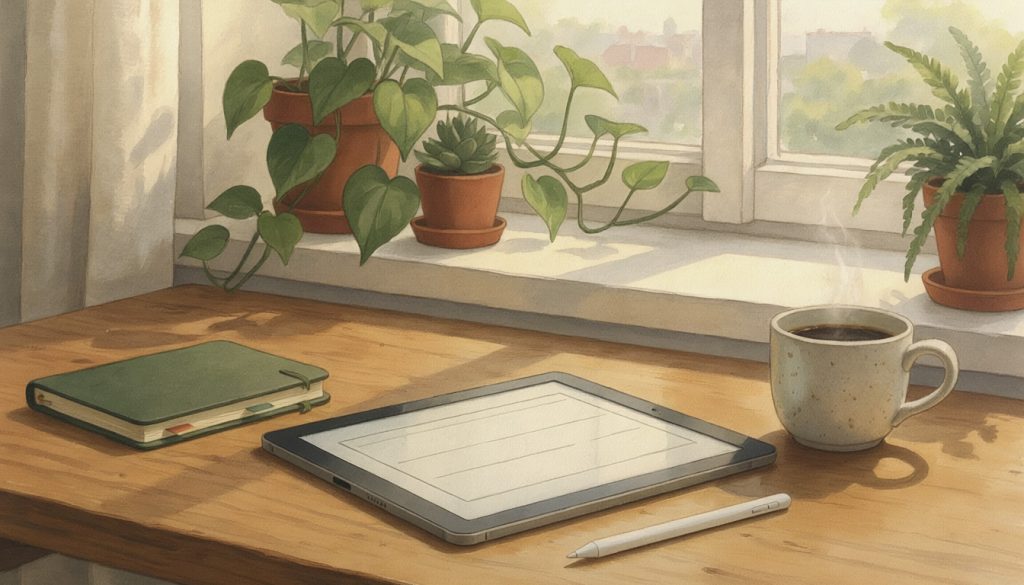
But be clear about the trade. If the rigidity was what helped you, this doesn’t give it back. A device that can hand you a new template in ten seconds can hand you a new template every ten days, and then you’re configuring rather than writing. The constraint has to come from you now, and an expensive slate is a costly way to discover you weren’t going to supply it.
Which is the whole thing, really. Back at half past eleven with the lenses out, the question was never rigid versus flexible. It’s who chose the constraint — a stationery company’s print run, or you.
Written with AI assistance.

Comments