

This is the first post in For and Against, a series in which I take one argument about God at a time, for or against, and see how well it holds up.
Most of the familiar arguments against God look for something wrong with God himself. Can he make a stone so heavy he can’t lift it? Why would a perfectly good God allow so much suffering? If heaven can have free will without evil, why can’t Earth? Each one looks for a contradiction in what God is supposed to be, or a tension between that and the world we actually see.
Graham Oppy’s argument doesn’t. The Australian philosopher isn’t looking for a flaw in God at all. He’s trying to show that God is unnecessary: once everything is laid out, God is an extra you don’t need. It’s one of the strongest arguments against God I know, and a good lesson in how to argue about God at all, which is why I’m starting here.
I don’t think it succeeds. But it falls short in a far more interesting way than most.
Comparing big pictures
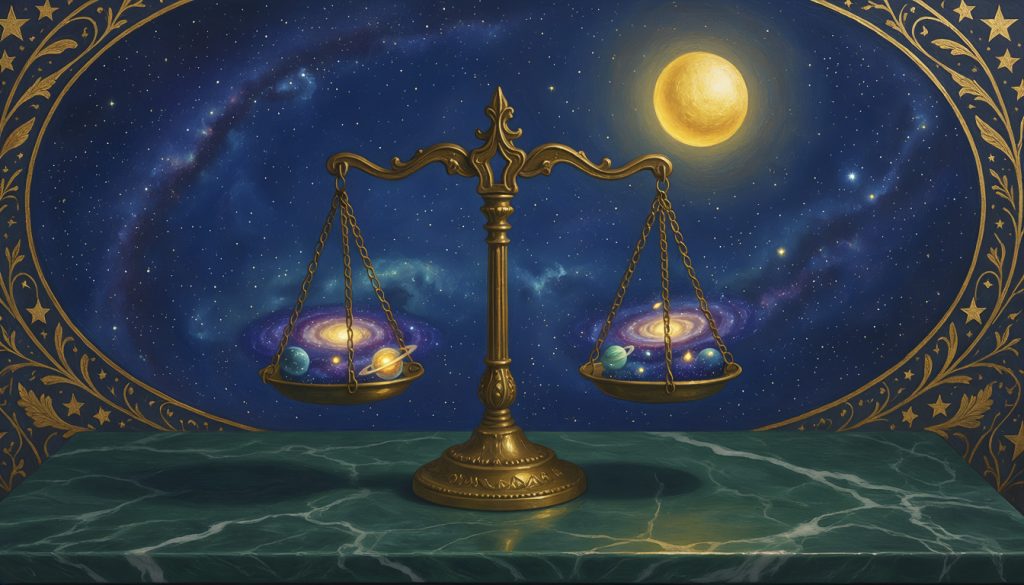
Oppy’s starting point is that the best way to decide whether to believe in God is to compare whole worldviews, what he calls big pictures: complete accounts of what exists and how it all hangs together. You then judge them roughly the way you’d judge rival scientific theories.
A good big picture has to be consistent, because a contradiction anywhere sinks the whole thing. It should fit the data and explain as much of it as it can. And it should do that with as few commitments as possible: as few kinds of things and as few basic assumptions as it can get away with. Occam’s razor, applied to everything.
In The Best Argument against God (2013), Oppy puts the two main contenders side by side. Naturalism says causal reality is just the natural world: no gods, nothing supernatural. Theism says there’s the natural world plus God, the ultimate source of everything else. He then works through around fifteen kinds of data, from cosmic fine-tuning to consciousness, morality, religious experience and suffering, asking at each point which big picture handles it better.
The argument
Stripped down, the argument has this shape, which Oppy also sets out in a short paper that’s free to read:
- Naturalism is simpler than theism.
- There’s no data that naturalism fails to explain at least as well as theism.
- Naturalism rules out God.
- So we have good reason to prefer atheism to theism.
The first premise looks almost free. Theism keeps everything naturalism has and adds God, so it carries more by construction. (Some theists dispute even this, but I’ll grant it.) Everything rides on the second.
Oppy’s defence of it is clever. Wherever theism offers an explanation, he shows that naturalism has a matching one at the same point. Take the oldest question: why is there anything at all? The theist eventually says that God exists necessarily and needs no further cause. Fine, says Oppy: the naturalist can say the same about the earliest state of the natural world. If the theist says instead that God simply exists, for no deeper reason, the naturalist can say that about the earliest state too. Every move open to one side is open to the other.
Once the explanations are tied, simplicity breaks the tie. Theism carries something extra, so it has to earn its keep by explaining more. On Oppy’s account, it never does.
Why I take it seriously
This is a better kind of argument than the ones most people reach for. It doesn’t need suffering to count against God, only for God not to explain anything better. It doesn’t need God’s attributes to collapse into contradiction, the way the stone does. It holds both sides to the same rules, so naturalism has to pass the very test it sets for theism.
And it’s honest about its limits. Oppy has long argued that no argument for or against God gives every reasonable, well-informed person a reason to change their mind, and he doesn’t exempt this one. He offers it as the best argument against God, not as a proof.
Where I get off
Oppy concedes that reasonable people can resist his argument. Here’s where I resist it.
Grant him everything he claims about the scorecard. Grant that naturalism is consistent, simpler, and explains every piece of data at least as well as theism. That still only shows that naturalism comes out ahead on one particular set of criteria. To get from there to “naturalism is the better big picture”, you need another premise: that these are the only properties that matter when ranking big pictures. The argument never establishes that. It takes the standards we use for comparing scientific theories and assumes they’re the complete set for comparing entire accounts of reality.
Maybe they are, but it isn’t obvious. Should it matter what a big picture ultimately rests on, and whether that foundation is the kind of thing that could plausibly exist by necessity? Should it matter whether a big picture can explain why its own method works, why simplicity, of all things, should be a guide to truth? I’m not claiming these belong on the list. My point is narrower: the argument needs the list to be complete, and it doesn’t show that it is. Add one item and the scorecard has to be redone, with no agreed way to weigh the new item against the old ones.
My second worry I hold more loosely. I think it can reasonably be argued that the best theistic big pictures carry more commitments, but buy a wider explanatory breadth with them. Take the questions where Oppy’s naturalism stops: why there’s anything at all, and why it’s the orderly, life-permitting kind of anything. Naturalism traces both back to the earliest state of things and ends there: necessary, brute, or the luck of the draw. Theism offers one account that covers both: a mind with reasons to make a world like this.
Oppy’s reply is that this only moves the question. Why those reasons, and that choice, rather than others? The theist has to stop somewhere too. That’s fair, but everyone having to stop somewhere doesn’t mean everyone stops at an equally good place. And if theism really does buy breadth with its extra commitments, the comparison is no longer a clean win. It becomes a trade: more assumed, more explained. Nothing in the argument tells you how to price that trade.

Where that leaves me
As an agnostic, I find this argument most useful exactly where it breaks. It shows what the disagreement between theism and naturalism is really about. Not whether God is logically possible, and not who has the cleverer proof, but which properties make one account of reality better than another, and how much each should count. I don’t think there’s an agreed answer to that, and I don’t think any single argument can supply one.
So it doesn’t move me off the fence. But it asks the question the right way: whole pictures, compared honestly, under the same rules for both sides. That’s the standard I’ll try to hold the rest of this series to.
Written with AI assistance.

Comments