
Originally written in 2018 · fully rewritten 2026 with AI assistance · updated with current data and a new section on the information environment
When I wrote about this topic years ago, I argued that religion was a virus of the mind, but that politics was the bigger problem — that divisions driven by tribal political loyalty were doing more damage to the world than any church. I still believe the first half. I was wildly, embarrassingly optimistic about the second.
Because whatever I thought politics was capable of in 2018, it turned out to be capable of more. And worse. And faster.
The years since have not been kind to anyone who still wants to believe that liberal democracy, once achieved, is a permanent fixture of civilised life. It isn’t. The evidence is overwhelming now, and it is no longer coming from fringe commentators or partisan hand-wringing. It is coming from the institutions whose entire job is to measure this stuff, and their measurements are alarming.
The numbers tell a story we used to pretend wasn’t happening.
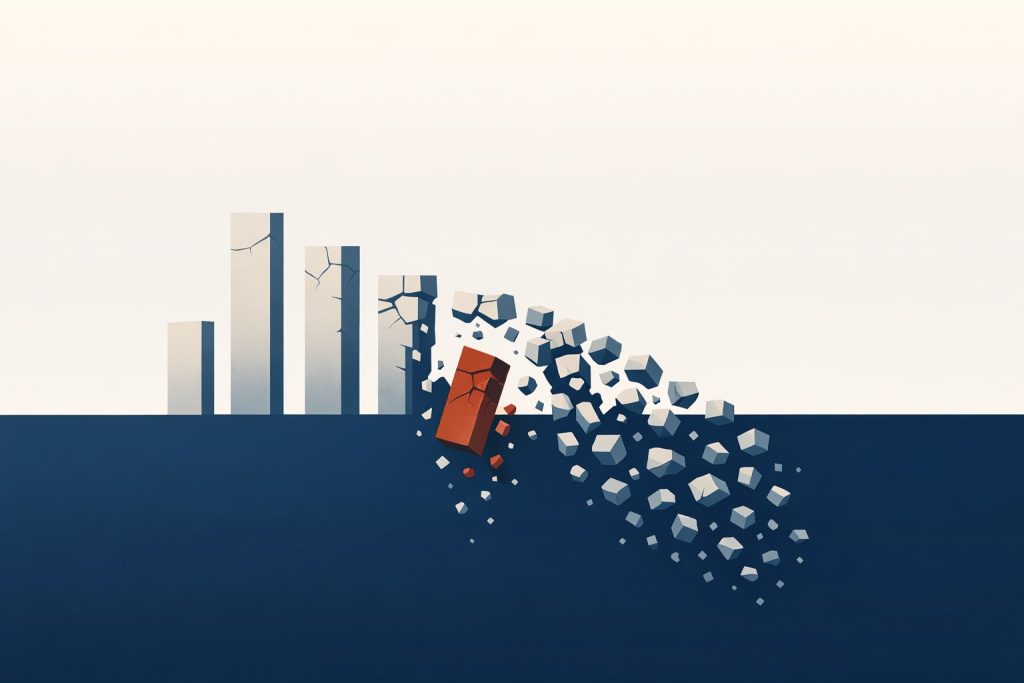
The V-Dem Institute at the University of Gothenburg produces what is probably the most comprehensive dataset on democracy in the world — covering more than 200 countries dating back to the eighteenth century and drawing on the expertise of thousands of contributors. Their 2026 report is titled, with uncharacteristic bluntness for academic work,” Unravelling the Democratic Era?
The top-line finding: nearly a quarter of the world’s countries are currently undergoing democratic backsliding. Of the ten newest cases, six are in Europe and North America. The list includes Italy, the United Kingdom, Croatia, Slovakia, Slovenia, and the United States. For the average person on Earth, democracy has now regressed to roughly 1978 levels. The gains of the third wave of democratisation — the wave that swept through Southern Europe, Latin America, and the former communist world — are, in V-Dem’s words, “almost eradicated.”
Forty-four countries are autocratising. Only eighteen are moving in the opposite direction. For the second consecutive year, autocracies outnumber democracies on the planet.
Freedom House’s Freedom in the World 2026 tells the same story from a different angle. The United States received its lowest score since the 100-point system began in 2002. V-Dem now classifies the US as merely an “electoral democracy” rather than a liberal one — the first time in over fifty years that this has been the case. Press freedom in the Americas saw its sharpest drop in the United States specifically, falling from “Low Restrictions” to “With Restrictions.” International IDEA counts 2024 as the ninth consecutive year in which more countries declined than improved on democratic indicators — the longest such streak since the organisation began measuring in 1975.
This is not a vibe. This is not partisan anxiety. This is what the data says.
What was “in jeopardy” is now gone.
Go back and read what I wrote before. I worried that abortion rights in the US might be curtailed. That happened — Dobbs in 2022, and the map of American reproductive rights now looks like something from the 1950s. I worried about the EU being “kind of in trouble.” Since then, the UK left properly, AfD became the single largest party in German polls at 26% as of late 2025, and the old centre-right Brandmauer’s opposition to working with the far right is visibly cracking across the continent. I worried about “the rise of nationalism.” Hungary’s Orbán spent a decade showing the playbook — capture the judiciary, hollow out the press, rewrite the electoral map, keep the elections but gut their meaning — and the playbook has been studied and copied enthusiastically. The rule of law has declined by roughly 30% in Hungary since 2010, according to IDEA’s measure. Corruption rose 17%. Inequality rose 20%. Hungary’s rule-of-law score is now worse than Malawi’s.
That is what democratic backsliding actually looks like when it’s finished. Not tanks in the streets. Just a slow, procedurally legal, constitutionally dressed-up collapse of the things that made the country liveable.
I worried, back then, that “the right wing is on the rise again.” I want to be precise about what’s happened since: a specific subset of the right — the nationalist, anti-pluralist, often openly racist, institution-hostile variant — has gone from noisy minority to governing force across much of the West. This is not the centre-right of Merkel, Cameron, or McCain. It is something older and darker that those parties used to keep at arm’s length and now, increasingly, coalition with.
The new variable: the information environment has been weaponised

Here is what I didn’t see clearly enough in 2018. I wrote about confirmation bias as a psychological problem—a bug in human cognition that makes it hard to change minds. That was true then, and it is true now. But I treated it as a feature of individual psychology. I failed to grasp the extent to which it had been industrialised.
The architecture of how we receive information has been rebuilt since then, deliberately, around engagement. Algorithms on every major platform are tuned to maximise time-on-platform, which in practice means they maximise outrage, fear, and tribal identification — because those are the emotions that keep people scrolling. The European Parliament has now formally accused major platforms’ recommender systems of undermining democratic discourse. The World Economic Forum’s 2025 Global Risks Report ranks misinformation as the single greatest short-term threat to political cohesion and social trust. Meta has dismantled its third-party fact-checking programme in the US. The EU has fined x for breaching Digital Services Act transparency rules. A functioning “perpetually improving disinformation machine” can now be built for about $400, and generative AI can produce a thousand variants of a false narrative in the time it takes you to read this sentence.
What this means in practice is that the classic post-Enlightenment assumption — that in a free marketplace of ideas, true claims will tend, on average and over time, to defeat false ones — has ceased to be a safe one. The market is rigged. The platforms are not neutral. The velocity and cost structure of disinformation have collapsed, while those of serious journalism have not. Serious journalism is, in fact, more expensive, slower, and rarer than it was a decade ago, as newspapers continue to die.
This is how you get a world in which demonstrable facts — vaccines work, the climate is warming, this election was not stolen, a caravan did not invade the country — become matters of tribal affiliation rather than evidence. It is how you get voters who can simultaneously believe the economy is terrible while doing well personally. It is how you get the specific, peculiarly modern form of politics in which loyalty to a leader overrides every previously held principle, in real time, because the principles were never really the point.
The loyalty I misunderstood
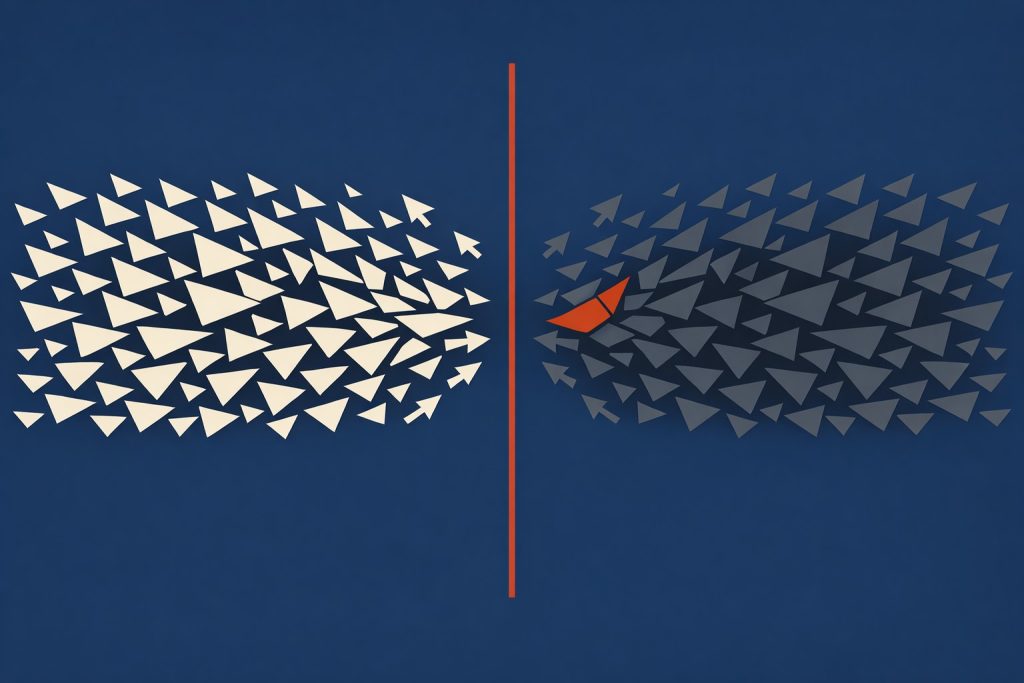
I wrote in the original piece that committed partisans were “too emotionally involved” to be reached by argument — that questioning the party would mean questioning themselves, and so they couldn’t do it.
I was right about the mechanism. I was wrong about how widespread and how strong it was.
What scholars of authoritarianism call “affective polarisation” — the degree to which partisans dislike the other side’s voters as people, not just disagree with their policies — has risen sharply across Western democracies. In the US, the share of partisans who say the other party is not just wrong but a threat to the nation is now a majority on both sides. In this climate, the old democratic assumption — that power alternates, and the losing side accepts defeat because the institutions are bigger than the contest — becomes fragile. If you genuinely believe the other side winning is an existential threat, you will tolerate, or quietly applaud, almost anything your side does to prevent that outcome.
That is the shape of democratic death in the twenty-first century. It does not arrive in a coup. It arrives when enough people decide that winning matters more than the rules, that the opposing party is not a legitimate rival but an enemy, and that the institutions which constrain their side are therefore illegitimate and need to be broken. Everything else follows: the judicial capture, the press intimidation, the slow unmaking of independent civil service, the deployment of troops to domestic cities that would have been unthinkable a decade ago and is now a monthly news cycle. All of it becomes procedurally defensible to a base that has decided the stakes justify it.
What I still believe, sharpened

The original post ended with a call to reach out to the undecided — the people who don’t vote, who vote occasionally, who don’t pay much attention. I still believe that’s where most of the available political change lives. The evidence on persuasion is fairly consistent: committed partisans are extremely hard to move, but the margin of voters who are soft, distracted, or disengaged is large enough to decide almost any election. That’s where effort compounds.
But I’d add three things I didn’t say clearly enough the first time.
First: institutions are the point, not policies. If you only care about which party wins the next election, you have misread the moment. What matters is whether the rules, courts, press, civil service, and electoral machinery survive intact, because those are the things that make a next election possible at all. Disagreeing with a governing party is normal politics. A governing party that dismantles the referee is something else. Learn to tell the difference and vote accordingly, even if it means supporting people whose policies you find mediocre against people whose policies you find appealing but whose methods you don’t.
Second: the information environment is a political battleground, and you are standing on it whether you know it or not. Every time you share an emotionally satisfying claim without checking it, you are doing unpaid work for the disinformation economy. Every time you fall for rage-bait, you are training the algorithm. Slowing down, verifying, reading past the headline, following primary sources rather than reaction videos — these feel like minor personal virtues, but at scale they are civic acts. Media literacy is no longer a nice-to-have. It is a survival skill.
Third: the cynical path is a trap. The most common response I see to all of this, particularly from people my age and younger, is a kind of exhausted nihilism — it’s all broken, they’re all the same, nothing I do matters, I’m going to log off. That posture is understandable. It is also exactly what the authoritarian project wants from you. Disengagement is not neutrality. When the active minority is energised, and the passive majority is demoralised, the active minority wins—every time.
The quiet part
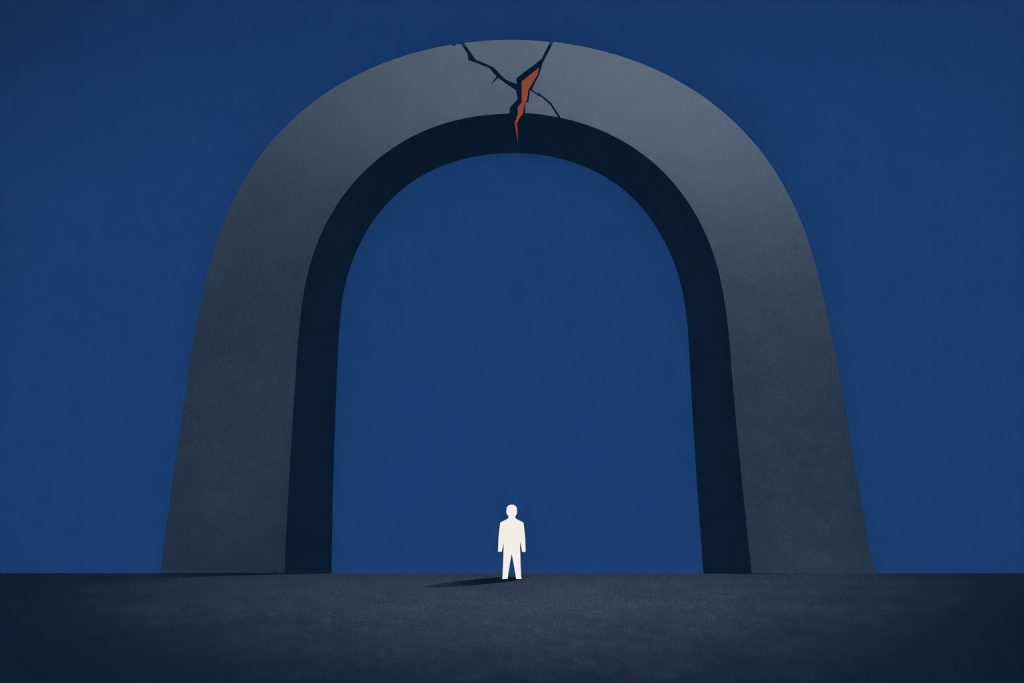
The world I was worried about in 2018 is now the world we live in. The things that looked precarious then are either gone or visibly going. That is hard to sit with, and it is especially hard to sit with for people of liberal, secular, pluralist temperament — the kind of people who assumed history had a direction, and that direction was roughly ours.
It doesn’t, and it isn’t. The arc of the moral universe does not bend toward justice on its own. It bends when enough people pull on it, and it springs back when they let go. What we took for inevitability was actually the cumulative effect of a lot of unglamorous work by a lot of people across several generations — and when that work stops, so does the progress.
We are in a period where that work has, in many places, stopped. The question is not whether the situation is bad. It is bad. The question is whether the people who can see that it’s bad are willing to do something about it — vote, show up, donate, organise, argue with the uncle, share the boring, accurate article instead of the exciting wrong one, run for the school board, join the party, write the letter. Small things, multiplied.
It was true when I wrote it the first time. It is more true now. You are part of this world, and it is irresponsible to pretend these things do not concern you. We all should be better than that.
We may not get many more chances to prove we can be.
About this post: I first wrote this in 2018. Rereading it in 2026, almost everything I’d feared had come true — so I rewrote it with an AI assistant (Claude). It helped me pull current data, update the facts, and add a new section on disinformation. The opinions and conclusions are mine.


Comments