

TL;DR – One in four people still lack safely managed drinking water — the same ratio as 2015 — despite the problem being fully solved in theory and costing a known $114 billion a year, against $9.6 billion in actual aid. Meanwhile the largest data centre operators will spend close to $750 billion in 2026 alone. Nobody chose compute over water; that’s the point — problems that are real, solvable, and boring lose by default, because attention flows to whatever makes a good story, and a water pipe never does.
I wrote a version of this ten years ago, and it was bad. It was a list. It said the world had problems, here were three of them, and people should stop staring at their phones. It shouted in capital letters at flat-earthers and creationists, which is what you do when you have contempt but no Argument. I have since learned that when I am shouting, it is usually because I have not worked out what I think.
Here is what I think now.
The number that hasn’t moved
In 2015, roughly a quarter of the world’s population lacked access to safely managed drinking water. In 2024, after a decade of what the WHO and UNICEF describe as genuine progress, the figure was 2.1 billion people — still one in four — including 106 million who drink directly from untreated surface water. Forbes

Progress happened. The population grew. The ratio held.
This is not a mystery. Nobody is confused about how to give a village clean water. There is no missing theory, no unsolved physics, no waiting on a breakthrough. The UN’s own assessment is that meeting the 2030 target requires a sixfold acceleration in drinking water, a fivefold acceleration in sanitation, and an eightfold acceleration in hygiene — which is a technocratic way of saying that we know exactly what to do and are doing roughly a sixth of it. Core Insights
The cost is known, too. The World Bank has estimated the capital cost of universal safely managed access at around $114 billion per year, excluding the cost of operating and maintaining the infrastructure afterwards. Official development assistance to the water sector reached $9.6 billion in 2024.
Hold that second number.
The number that moved a great deal
The capital expenditure of the fourteen largest publicly owned data centre operators is expected to approach $750 billion in 2026, against a little under $450 billion the year before. Five American firms alone — Microsoft, Alphabet, Amazon, Meta, Oracle — have committed to spending between $660 and $690 billion this year, nearly double their 2025 levels. Core Insights
I want to be careful here, because there is an easy and dishonest essay sitting one paragraph away, and I would rather not write it.
The dishonest essay says: “Look, they spend in a week what water needs in a year, and their machines drink the water, too.” The last part is where it goes wrong. Data centres do consume water, directly for cooling and indirectly through thermoelectric power generation, and the figures are genuinely large. But they are also genuinely uncertain. There is no accurate national data on data-centre water consumption in the United States, partly because it isn’t collected nationally and partly because the indirect component is very hard to trace. One careful writer on this subject published a correction after realising he had misread a Berkeley Lab figure and understated data-centre consumptive water use by a factor of nine. In absolute terms, US data-centre direct water consumption remains small relative to total national consumption — the real harm is local and concentrated, which is a different and less rhetorically convenient shape of the problem. The systemic environmental risks of artificial intelligence
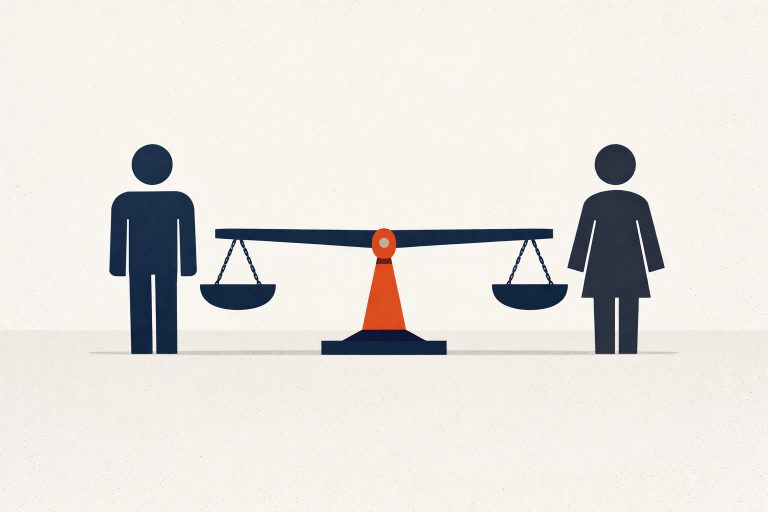
So I will not run the comparison that way. The scandal is not that AI drinks the water. The scandal is the two spending figures sitting side by side, and the fact that nobody had to choose between them.
That is the point I actually want to make. There was never a meeting. No committee weighed clean water against compute and chose compute. The $690 billion was not diverted from anything. It simply flowed to where capital flows, and the $9.6 billion trickled to where obligation trickles, and these two facts are unrelated in every way except that they describe the same species in the same year.
Attention is the scarce resource, not money.
We tend to describe this as a funding problem, and funding is where it shows up, but funding is downstream.
What water infrastructure lacks is not money. It lacks a news cycle. It lacks a demo. It lacks quarterly earnings, a share price, and a founder with a thesis. Nobody has ever been made rich by a pipe. A borehole in Sindh does not go viral, does not appear on stage, does not generate the sensation of witnessing the future arrive. The capital that flows to AI flows partly because AI is legible as a story — a thing you can watch happen, that changes visibly month over month, that offers the participant a feeling of being early.
Clean water offers no such feeling, because it is not early. It is late. It is a hundred and fifty years late in most of the places it hasn’t reached. Roman aqueducts are older than the problem’s solution. There is nothing to be early for.
And this is the mechanism. Problems compete for a fixed quantity of collective attention, and attention has a shape it prefers: novel, visible, narratively resolving, and above all ongoing — something you can follow. Some problems have that shape. Some problems, structurally and permanently, do not. Those problems lose. Not because anyone rejected them, but because they never entered the contest.
Call it the default: the fate of any problem that is real, solvable, funded at a fraction of its cost, and boring.
Water is the cleanest example, which is why I’ve used it. But the category is large. Sanitation. Road safety. Lead abatement. Vitamin A. Tuberculosis, which kills more people than almost anything, has not been interesting since 1950. These are not hard problems. They are unphotogenic ones.
What follows
Nothing comforting.
The version of me who wrote this in 2016 finished by telling people to look up from their phones and educate someone. That was a fantasy of individual action, and it was a fantasy because it assumed the problem was that people didn’t know. People do know. Knowing has not helped. The 2.1 billion figure is published annually by two of the most reputable institutions on Earth, and it changes nothing, because a fact with no story attached has nowhere to lodge.
I don’t think the answer is to feel worse about this. Guilt is just another thing competing for attention, and it competes well, which should make us suspicious of it.
I think the answer, insofar as I have one, is smaller and more structural. If problems lose by default when they lack narrative, then the work is to build institutions that do not run on narrative. Institutions that fund the boring thing on a schedule, that treat the sixfold acceleration as an accounting fact and not a rallying cry, that continue when nobody is looking — because nobody will be looking. That is what a functioning state is supposed to be, and it is what development finance was supposed to be, and both are worse at it than they were a decade ago.
Meanwhile, I will keep building software. I do not think this is shameful. Someone has to. But I would like to hold two things at once: that the industry I work in is doing genuinely useful things, and that the sheer gravitational mass of capital it has accumulated in eighteen months is a fact about what our attention rewards, not a fact about what matters most.
The Romans could move water uphill. We can move a trillion dollars into a data centre in a fiscal year.
Written with AI assistance. The Argument, and any errors in it, are mine.




Comments